Can You Learn Azure Data Engineering in 90 Days? The 90-Day Azure Data Engineering Roadmap


TL;DR
We show how a focused 90-day Azure data engineering roadmap can produce credible interview evidence through three progressively harder Azure projects. You will assess prerequisites, plan weekly capacity, build and operate a lakehouse pipeline, score your portfolio, and decide whether you are ready to apply.
Can You Learn Azure Data Engineering in 90 Days? The 90-Day Azure Data Engineering Roadmap
An eligible new Azure account includes a $200 credit for its first 30 days, which makes scope discipline tangible when a job search has a real deadline. We focus this plan on build evidence, not a sprawling inventory of cloud services.
Yes, 90 days can be enough to create credible Azure data engineering evidence for interviews when the scope is narrow and every week ends in a working artifact. This 90-Day Azure Data Engineering Roadmap prioritizes SQL, Python, storage, Data Factory, Databricks, Delta, medallion design, streaming, testing, monitoring, and deployment over passive certificate study.
Can You Learn Azure Data Engineering in 90 Days?
We treat 90 days as a deadline, not a promise of complete mastery. The goal is to reach the point where you can explain an architecture, build a pipeline, diagnose a failure, and walk a reviewer through the evidence in your repository.
Start with a baseline that separates skills you need on day one from skills you can acquire while building. Azure’s medallion layers give the central structure: bronze holds raw data, silver validates and refines it, and gold serves business-ready data.
-
Essential Before Day One: Write basic SQL joins, aggregations, and window functions; write and debug small Python functions; understand ETL and data-warehouse basics; use Git commits and branches.
-
Learn While Building: Configure storage, orchestrate with Data Factory, transform with Databricks, work with Delta tables, build streaming logic, add tests, and document monitoring.
-
Defer Until Later: Deep specialization in every Azure analytics service, complex network architecture, and multi-cloud tooling can wait until your first complete lakehouse project works.
We keep the core stack intentionally narrow: ADLS Gen2, Azure Data Factory, Azure Databricks, Delta tables, and Power BI. For a deeper architectural foundation before you start, use our lakehouse primer.
What Does the 90-Day Azure Data Engineering Roadmap Look Like?
A good three-month plan moves from a functioning batch pipeline to resilient data processing, then to visible portfolio proof. Microsoft’s reference architecture similarly places Data Factory in ingestion, Databricks in scalable processing, and Power BI in data serving.
The table below is the backbone of the roadmap. Do not advance because a calendar week ended. Advance when the stated evidence exists and you can explain it.
| Phase | Days | Outcome | Study Topics | Build Tasks | Evidence Produced |
|---|---|---|---|---|---|
| Foundations | 1-30 | Working batch lakehouse | SQL, Python, ADLS, Data Factory, Databricks, Delta, bronze/silver/gold | Build ingestion, transformations, and a BI output | Architecture diagram, run evidence, README |
| Production Patterns | 31-60 | Resilient incremental pipeline | Incremental loads, streams, checkpoints, schema changes, data quality | Inject duplicates, late records, bad data, and a schema change | Tests, quarantine evidence, recovery notes |
| Portfolio And Interviews | 61-90 | Presentable delivery evidence | Git, CI/CD, infrastructure configuration, access controls, monitoring | Harden the strongest project and rehearse walkthroughs | Deployable repository, operational notes, cost notes, demo |
How Should Days 1 Through 30 Build the Foundation?
Use the first week to test your prerequisites and set up one repository. In weeks two and three, land source data in ADLS through Data Factory, then transform it into Delta tables with Databricks. Use the last ten days to validate silver data, create gold aggregates, and publish a simple Power BI view.
The result should be modest but complete. A reviewer should be able to see where data starts, how it changes, and which business question the gold layer answers. Our learning approach can help you sequence the concepts around that first build.
How Should Days 31 Through 60 Add Production Patterns?
Now make the pipeline fail on purpose. Add duplicate records, malformed rows, a late-arriving file, and a new source field. Build incremental logic, retain checkpoints, route invalid data for review, and write down the exact steps needed to replay a failed load.
Choose your ingestion pattern deliberately. Continuous incremental ingestion can reduce latency but increases cost, while triggered incremental processing lowers cost with more latency, according to ingestion guidance.
How Should Days 61 Through 90 Create Portfolio Proof?
The final phase is not a scramble to add more tools. It is time to make your strongest project easy to inspect: clean the repository, add setup instructions, test the critical transformations, document failures, and rehearse a five-minute walkthrough.
Use short comparison exercises to understand where Event Hubs, Stream Analytics, Synapse Spark, or Iceberg might fit. Keep them out of the main build unless they solve a clear requirement. Your portfolio is stronger when it shows depth and decisions rather than a long list of half-finished services.
When you need to compare a curriculum against this deadline-led approach, our curriculum audit helps distinguish broad tool coverage from the practical lakehouse skills you need to demonstrate.
Which Portfolio Projects Should You Build First?
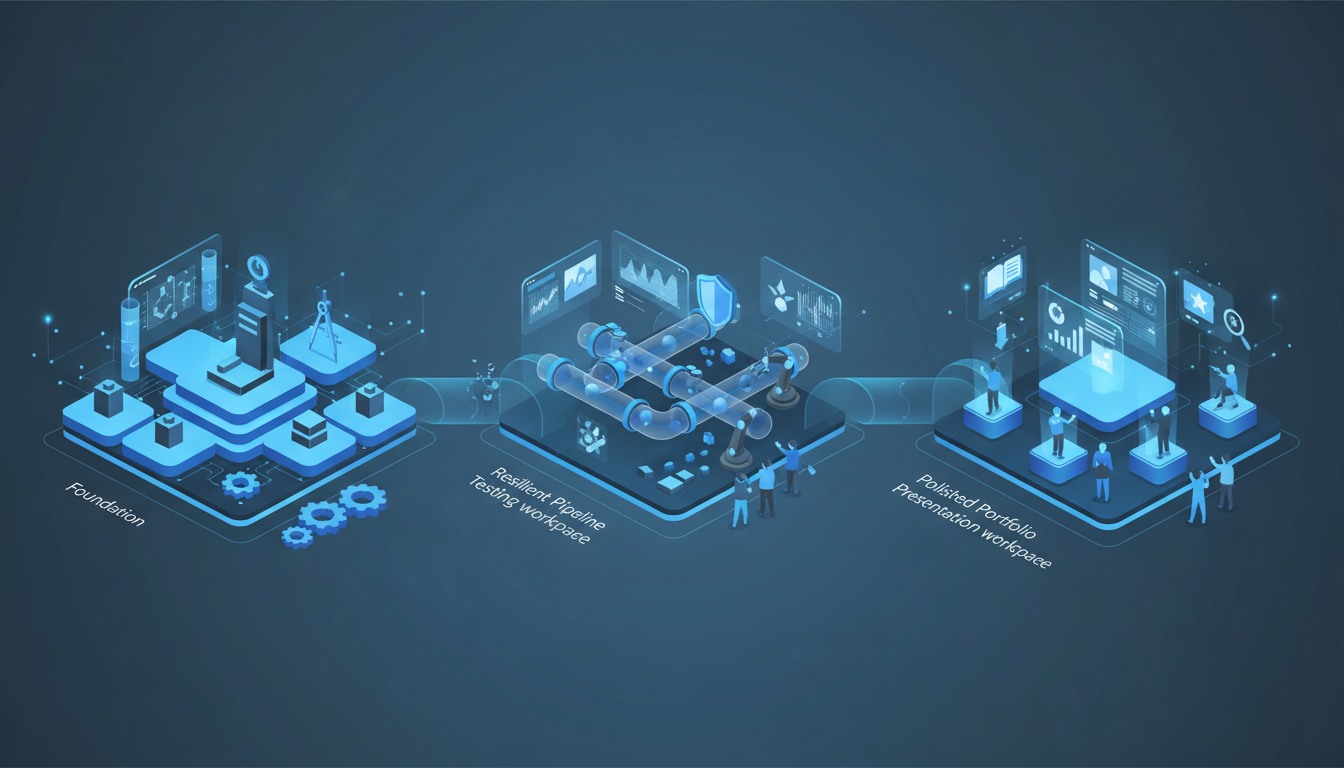
Three projects are enough when each one adds a clear engineering capability. We recommend progressing from an end-to-end batch lakehouse, to a failure-aware incremental pipeline, to a governed delivery layer.
Project One: Can You Build a Medallion Lakehouse?
Build a business analytics pipeline with Azure Data Factory, ADLS, Databricks, Delta bronze/silver/gold tables, and Power BI. Data Factory should land source files, Databricks should create the layers, and Power BI should answer one decision-oriented question.
Your repository needs an architecture diagram, a data dictionary, setup steps, successful run evidence, and an explanation of why each dataset belongs in its layer.
Project Two: Can You Handle Incremental Batch and Streaming Data Safely?
Create an operations pipeline that processes new data incrementally and demonstrates checkpoints, schema changes, data-quality handling, and recovery. Include a known duplicate, a late arrival, a malformed record, and a newly introduced column.
Azure Databricks tracks progress through checkpoint state, allowing Auto Loader to resume after failures and support exactly-once Delta writes. Show that behavior in your own runbook, not merely in a notebook comment.
Project Three: Can You Deliver a Governed Data Product?
Harden one earlier project rather than starting a fourth project. Add environment-aware configuration, a permissions matrix, automated tests, CI/CD, monitoring, cost assumptions, and recovery steps.
This final artifact should let you answer practical interview questions: who can access the data, how a change gets deployed, how a failed run is detected, and what happens when the source schema shifts. Our project implementation guide can help you keep the focus on evidence that a reviewer can inspect.
How Do You Make the Projects Production-Ready?
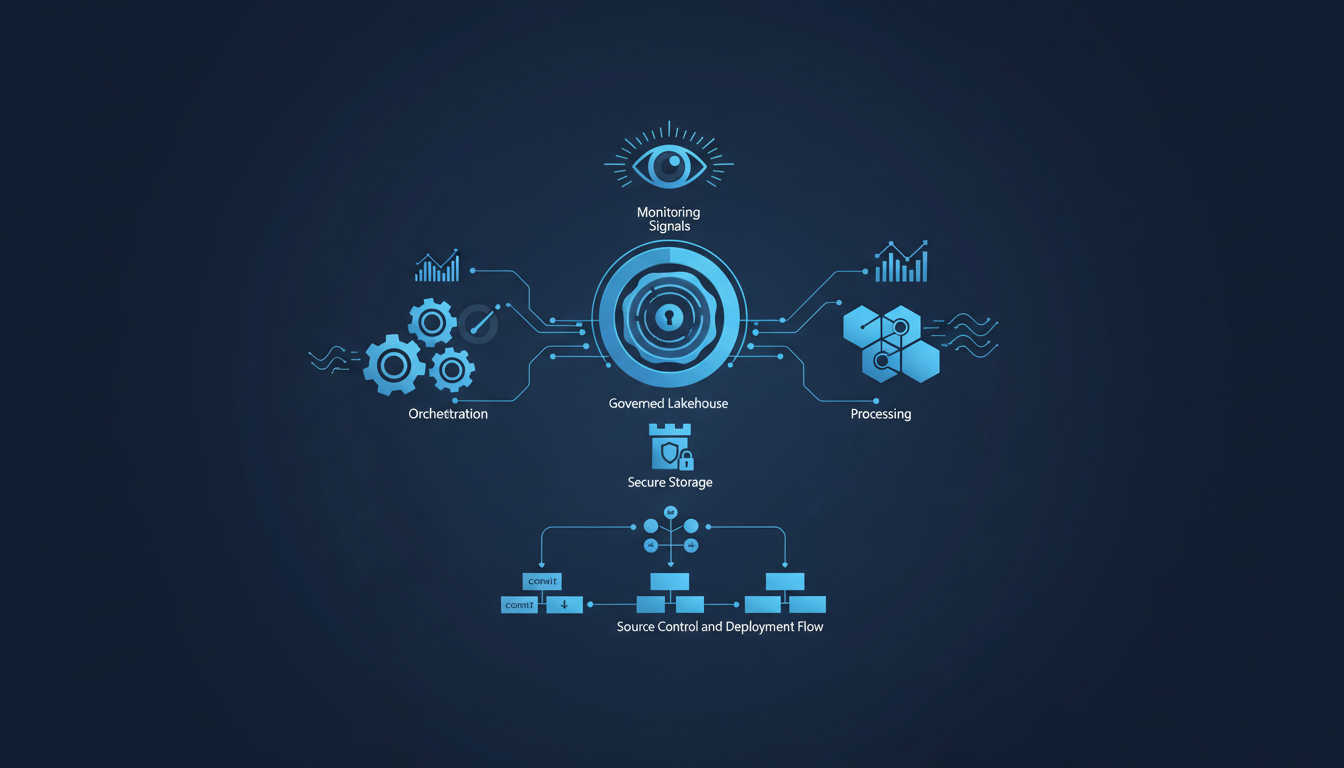
A portfolio becomes more credible when it contains operational decisions, not just transformations. We want each project to show how it would be run, changed, and recovered by a real team.
How Should You Show Governance?
Create a catalog, schema, and table naming convention. Add ownership, descriptions, basic data classification, and a small matrix showing who can discover, read, modify, or manage each object.
Unity Catalog provides access controls and lineage capabilities for governed data assets. In your project, explain the principle of least privilege in plain language rather than copying permissions commands without context.
How Should You Show Delivery Practices?
Keep code, notebooks, tests, and configuration in version control. Use a pull-request checklist, run automated tests, and create an environment-specific deployment process that excludes secrets from the repository.
Microsoft’s CI/CD workflow describes the core sequence as versioning, coding, building, deploying, testing, running, and monitoring. Your project does not need enterprise complexity, but it should make that lifecycle visible.
How Should You Show Monitoring and Recovery?
Document one alert condition, one data-quality check, and one recovery path. Show a failed run, identify the signal that exposed it, then show the rerun or replay that resolved it.
-
Schema Change: Explain whether the pipeline accepts a new column, rescues it, or stops for review.
-
Bad Record: Keep an example invalid record and show where it is quarantined.
-
Restart Drill: State what checkpoint or run history you inspect before rerunning an incremental pipeline.
How Should You Score Your Portfolio?
Score every category from zero to two. We recommend reaching at least 10 points before describing the portfolio as application-ready.
| Criterion | 0 Points | 1 Point | 2 Points |
|---|---|---|---|
| Architecture Diagram | Missing | Generic | Clear components, data flow, and trade-offs |
| Reproducible Setup | Missing | Partial | Setup, configuration, and cleanup steps |
| Tests And Quality | Missing | Manual checks | Automated tests and invalid-data handling |
| Operational Notes | Missing | Run steps only | Monitoring, recovery, and replay instructions |
| Cost Notes | Missing | Vague | Assumptions, usage choices, and shutdown plan |
| Business Explanation | Missing | Tool list | Decision, metric, stakeholder, and output |
For a broader view of how learning frameworks compare with real migration work, read our framework comparison.
How Many Hours per Week Do You Need?
A 90-day window is about 12.86 weeks. Use this formula before committing to the plan: total capacity equals your available weekly hours multiplied by 90 divided by seven.
The right pace is the one that preserves project quality. If your schedule drops, reduce optional comparisons before you remove testing, documentation, or recovery evidence.
| Variant | Weekly Capacity | Approximate 90-Day Capacity | Planning Rule |
|---|---|---|---|
| Accelerated | 15 or more hours | 193 or more hours | Complete all three projects, recovery drills, and mock interviews |
| Standard | 10 to 14 hours | 129 to 180 hours | Complete Projects One and Two fully, then harden the best artifact |
| Reduced Load | 6 to 9 hours | 77 to 116 hours | Finish the batch lakehouse and one recovery scenario, then extend the deadline |
A balanced week can dedicate roughly 40 percent to building and debugging, 25 percent to guided learning, 20 percent to tests and documentation, and 15 percent to interview walkthroughs. Those are planning allocations, not a claim about a universal learning rate.
If you miss a week, reset the sequence honestly. Keep the core artifacts and shift the deadline if necessary. Our flexible schedule discussion offers a useful way to think about matching a learning format to available time.
How Can Vision Board Help You Keep the Deadline?
At Vision Board, we built this deadline-led approach for learners who need a credible interview story, not another folder of disconnected exercises. Start by reviewing the lakehouse concepts behind the roadmap, then use our materials to turn every milestone into an architecture, repository, and walkthrough you can defend. Our published resources provide useful context for habits that help people stay accountable and reinforce core topics between build sessions when you need concise refreshers before returning to a difficult build. Keep the scope honest: complete the first project before adding tools, write down each failure you fix, and rehearse the business purpose of every dashboard. If your weekly capacity changes, reset the sequence instead of pretending the original deadline still fits. Build proof that a hiring manager can inspect, explain clearly in interviews, and take your next step today with Vision Board
FAQs on 90-Day Azure Data Engineering Roadmap
Can I Start This Roadmap Without Cloud Experience?
You can start without prior Azure experience if you can write basic SQL and Python. Use month one to learn cloud essentials while building one deployable pipeline.
Which Project Matters Most to Hiring Teams?
Your strongest artifact is an end-to-end lakehouse project because it connects ingestion, transformation, serving, and trade-offs. Make it reproducible, documented, tested, monitored, and easy to explain.
Should I Prioritize Certificates or Projects?
Prioritize projects when time is limited. A certificate shows study completion, but a repository with decisions, tests, monitoring, and recovery notes gives interviewers concrete evidence to discuss.
What Happens If I Have Fewer Than Ten Hours?
Reduce scope before reducing quality. Finish the batch lakehouse project, add one recovery scenario, then extend the portfolio phase rather than starting incomplete platform exercises.