
Azure Lakehouse Engineering Explained: Architecture, Benefits, and Best Practices
Learn Azure lakehouse engineering from a SQL background with Spark, Delta, Fabric, Databricks, orchestration, and Power BI.

Azure Lakehouse Engineering Explained: Architecture, Benefits, and Best Practices
Businesses today collect data from many different sources, including apps, websites, IoT devices, business systems, and cloud platforms. Managing all this data with traditional data warehouses has become increasingly difficult, especially when it includes both structured and unstructured information. That's where Azure lakehouse engineering comes in.
Azure lakehouse engineering combines the flexibility of a data lake with the reliability of a data warehouse in a single architecture. Instead of moving data between multiple systems, teams can collect, process, store, and analyze it in one place. This makes data management simpler, more scalable, and easier to maintain.
Whether you're an SQL developer, ETL engineer, data analyst, or cloud professional, learning Azure lakehouse engineering can help you build modern data platforms and prepare for today's data engineering roles. In this guide, we'll cover the architecture, key components, learning path, and best practices you need to get started.
Are You Ready to Start From Your Current Role?
You don't need years of cloud experience to begin learning Azure lakehouse engineering. Many of the skills you've already developed in SQL, ETL, reporting, or analytics continue to be valuable in a lakehouse environment. The biggest difference is learning how those skills apply to distributed data processing instead of traditional databases.
Your current role determines where you should begin. Whether you're preparing for an Azure data engineer job or transitioning from SQL, ETL, analytics, or cloud engineering, many of your existing skills remain highly relevant. The key is understanding how they apply to distributed data processing and modern Azure services instead of traditional databases.
If you're coming from a SQL background, begin by understanding object storage, Spark SQL, and DataFrames. The logic behind joins and relationships remains the same, but Spark distributes work across multiple machines instead of executing everything on a single database server. Once you understand distributed processing, learning the remaining Azure services becomes much easier.
ETL developers already have a strong foundation because they understand data movement, scheduling, retries, and operational workflows. The next step is learning how incremental pipelines work when data is stored as files instead of database tables. Practising these scenarios helps build confidence before moving into more advanced topics like streaming.
What Are the Core Components of Azure Lakehouse Engineering?
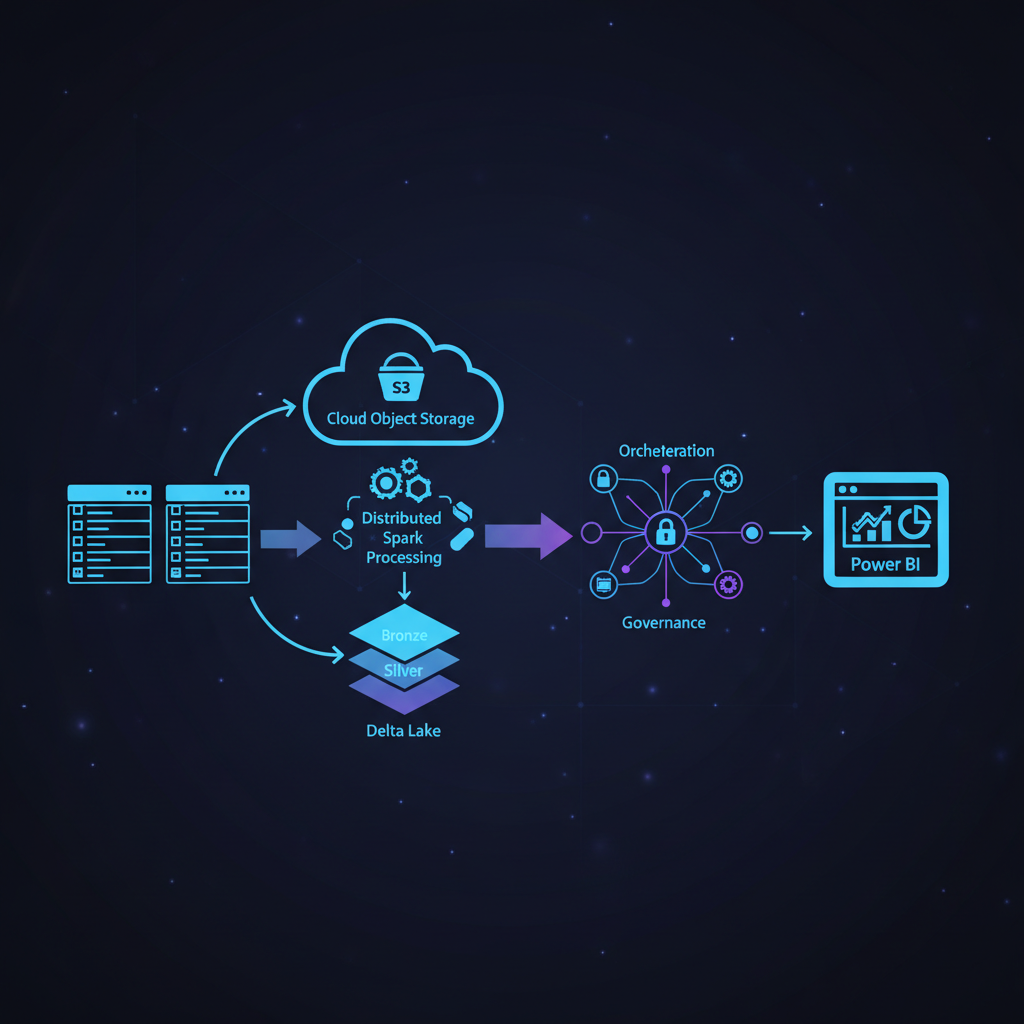
Understanding the individual services is just as important as understanding the overall architecture. Azure lakehouse engineering combines several technologies that work together to manage the complete data lifecycle. Rather than learning every Azure service independently, focus on how they contribute to a single workflow.
Azure Data Lake Storage
Azure Data Lake Storage Gen2 serves as the storage foundation for most lakehouse solutions. It allows organizations to store structured, semi-structured, and unstructured data in a scalable cloud environment. Keeping the original source files also makes auditing and reprocessing much easier when business requirements change.
Apache Spark
Spark is the distributed processing engine that powers most transformations within a lakehouse. Instead of processing data on one server, Spark divides work across multiple machines to improve speed and scalability. Engineers commonly use Spark SQL, DataFrames, and PySpark to build reliable data pipelines.
Delta Lake
Delta Lake adds transactional reliability to cloud storage by introducing features such as ACID transactions, schema enforcement, and version history. These capabilities make data pipelines more dependable and easier to recover when failures occur. Delta Lake also supports both batch and streaming workloads, making it an essential component of modern Azure lakehouse engineering for professionals looking to become an Azure data engineer.
Understanding the Medallion Architecture
Most organizations structure Azure lakehouse engineering using the Medallion Architecture because it provides a clear framework for managing data quality. Instead of applying every transformation at once, data moves through multiple layers where it becomes progressively cleaner and more valuable. This approach also makes debugging and maintenance much simpler.
The Bronze layer stores raw source data exactly as it arrives from operational systems. The Silver layer validates, cleans, and standardizes that information while removing inconsistencies and duplicates. Finally, the Gold layer contains business-ready datasets that analysts and decision-makers can confidently use for dashboards, reporting, and advanced analytics.
Following this layered approach helps engineering teams build pipelines that are easier to maintain, troubleshoot, and scale over time. It also creates a consistent structure that supports governance, collaboration, and reliable reporting across the organization.
What Should an Azure Lakehouse Engineering Learning Path Include?
Learning individual Azure services is helpful, but becoming job-ready requires understanding how those technologies work together. A structured curriculum should teach Azure lakehouse engineering in the same sequence followed by real-world engineering teams. Building this foundation makes it easier to design, deploy, and maintain scalable data platforms, while success stories from experienced professionals demonstrate how these skills translate into real career growth.
Rather than jumping between unrelated tools, learners should gradually move from storage and processing to orchestration, governance, and reporting. Each stage builds on the previous one, helping you understand not only how a service works but also why it fits into the overall architecture.
Build Strong Spark Fundamentals First
Many learners rush directly into Delta Lake without understanding distributed computing. While Delta Lake simplifies data management, it becomes much easier to use once you're comfortable with Spark DataFrames, Spark SQL, partitions, and joins. These concepts form the technical foundation of Azure lakehouse engineering.
Hands-on practice matters more than theory at this stage. Instead of watching demonstrations, build simple projects that load CSV and JSON files, transform them with Spark, and save them back as managed tables. This practical experience helps you understand how distributed workloads behave in production environments.
Learn Delta Lake Through Real Projects
Once Spark fundamentals are clear, the next step is learning Delta Lake. Delta Lake introduces ACID transactions, schema enforcement, version history, and incremental processing, making cloud storage behave much more like a traditional database. These features improve reliability while reducing pipeline failures.
A good learning program should ask you to build Bronze, Silver, and Gold layers instead of simply explaining the architecture. Creating rerunnable pipelines, updating existing records with MERGE operations, and handling schema changes are essential skills for anyone working in Azure lakehouse engineering. Pairing hands-on projects with Azure data engineering mock interviews can also help reinforce these concepts while preparing you for real-world technical interviews.
Include Performance Tuning in Your Learning Journey
Building a pipeline is only the beginning. Engineers must also understand why one pipeline runs efficiently while another becomes slow or expensive. Learning how partitions, file sizes, shuffle operations, and incremental loads affect performance helps create solutions that scale as data volumes increase.
Rather than memorizing optimization techniques, compare pipeline performance before and after making improvements. Understanding why a particular change reduces processing time is far more valuable than simply following a checklist.
How Can You Build a Portfolio That Demonstrates Real Skills?
Completing online courses is useful, but employers usually want evidence that you can solve practical data engineering problems. A strong portfolio should demonstrate your ability to build complete pipelines rather than isolated notebooks or simple dashboard projects.
A realistic capstone project should include historical data ingestion, incremental updates, Bronze-Silver-Gold transformations, automated pipelines, governance, monitoring, and business reporting. These components demonstrate that you understand the complete lifecycle of Azure lakehouse engineering instead of individual Azure services.
Your documentation is equally important. Include an architecture diagram, data dictionary, notebook repository, pipeline screenshots, and a short explanation of the design decisions you made. Explaining why you chose a particular architecture often carries as much value as the implementation itself.

Why Learn Azure Lakehouse Engineering with Vision Board?
Building modern data platforms requires more than learning individual Azure services. At Vision Board, the focus is on helping learners understand how storage, Spark, Delta Lake, orchestration, governance, and analytics work together as part of a complete engineering workflow. This practical approach helps bridge the gap between theoretical knowledge and real-world implementation.
Our learning programs emphasize hands-on projects instead of isolated demonstrations. You'll work with PySpark, Delta Lake, Microsoft Fabric, Azure Data Factory, and Power BI while building realistic data pipelines that reflect production environments. Every module is designed to strengthen your understanding of Azure lakehouse engineering through practical exercises and guided implementation.
Whether you're transitioning from SQL development, ETL, analytics, or cloud engineering, Vision Board provides a structured roadmap that helps you build industry-ready skills with confidence. By the end of your learning journey, you'll have practical experience, portfolio projects, and a stronger understanding of how modern lakehouse architectures support scalable business analytics.
Explore all our courses today!
FAQs on Azure Lakehouse Engineering
Can SQL developers learn Azure lakehouse engineering?
Yes. SQL developers already understand joins, schemas, and data modeling. They mainly need to learn Spark, distributed processing, Delta Lake, and cloud storage concepts.
Should I learn Databricks or Microsoft Fabric first?
Start with Spark and Delta Lake fundamentals. Once those concepts are clear, learning both Azure Databricks and Microsoft Fabric becomes much easier.
What should a modern Azure data engineering course include?
A strong course should cover storage, Spark, Delta Lake, orchestration, governance, streaming, performance tuning, and reporting through hands-on projects.
What should I include in my portfolio?
Build an end-to-end project with data ingestion, Bronze-Silver-Gold layers, orchestration, monitoring, governance, and Power BI reporting to demonstrate practical engineering skills.