

TL;DR
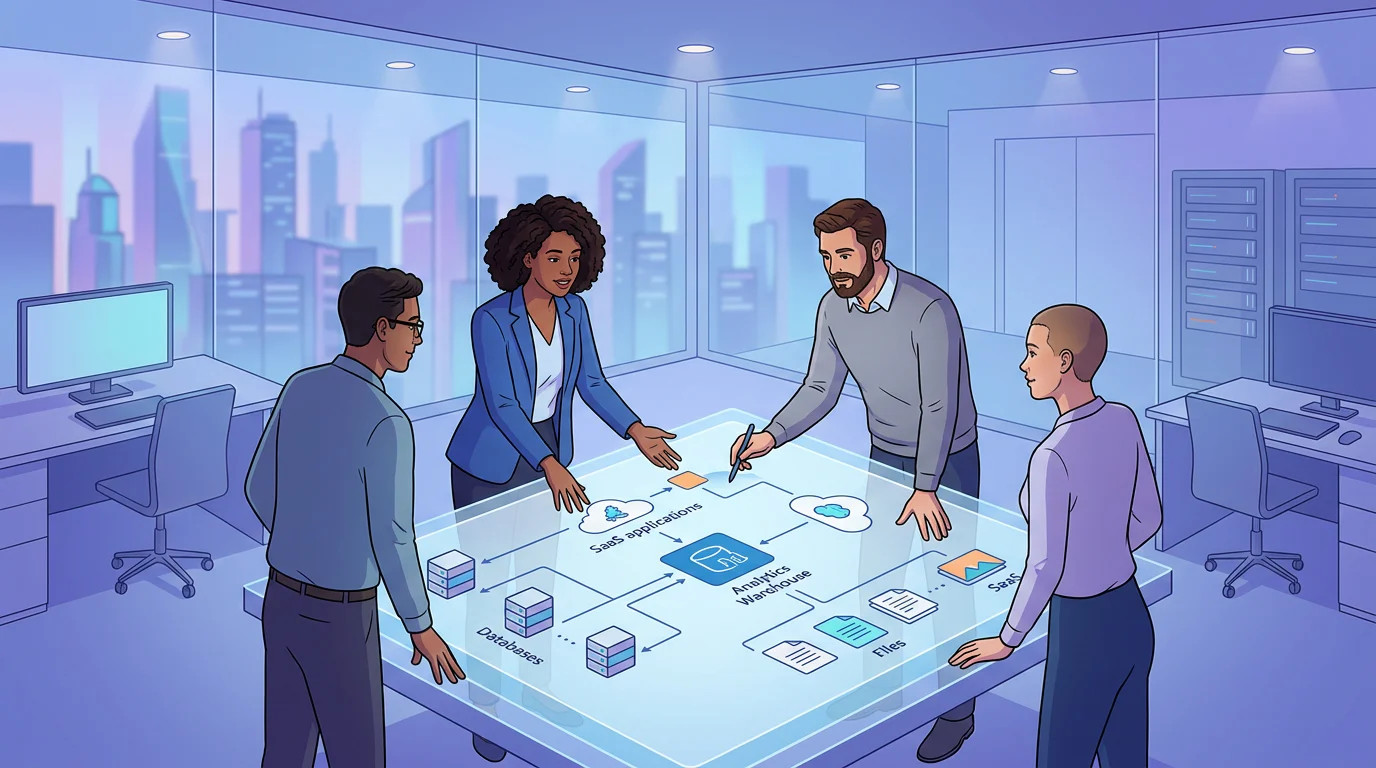
We explain how a unified analytics platform gives engineers, SQL analysts, and data scientists one governed data foundation while preserving separate tools, compute, permissions, and release workflows. You will see the shared architecture, medallion ownership model, security controls, and production handoffs that make a lakehouse usable across Azure data teams.
How Does a Unified Analytics Platform Work?
Data shared across teams needs a recovery window, not just a storage location. For example, Delta table maintenance uses a default retention period of 168 hours unless teams set another policy, which makes ownership of table history an operational decision.
A unified analytics platform lets data engineers, SQL analysts, and data scientists work from one governed data foundation while keeping separate tools, compute, permissions, and delivery workflows. Engineers publish refined tables, analysts query approved models, and scientists run reproducible experiments against trusted detailed data.
We will show how the architecture, medallion layers, governance controls, and release process fit together for an Azure data engineering team.
How Does a Unified Analytics Platform Share Data Without Forcing One Tool?
A unified analytics platform is not one giant workspace where every role runs the same code. It is a shared contract between storage, tables, metadata, and access controls. We recommend one durable data foundation, then role-specific paths for engineering jobs, SQL analytics, notebooks, semantic models, and model delivery.
The table layer is what makes the foundation dependable. Delta Lake provides transactional tables with ACID behavior, schema enforcement, version history, and batch and streaming support. That means an analyst can query an approved table while an engineering job publishes a new committed version, rather than reading a half-written folder.
The following architecture diagram shows how the shared foundation separates roles and workloads.
Sources
  ↓
Ingestion And Orchestration
  ↓
Shared Object Storage
  ↓
Transactional Tables: Bronze → Silver → Gold
  ↓
Catalog, Lineage, Permissions, Audit Controls
  ↓
Engineer Compute | SQL Compute | Notebook And ML Compute
  ↓
Pipelines | Semantic Models And BI | Experiments, Models, Applications
This design gives each role a common version of business data without demanding a common interface. Engineers manage ingestion and transformations, analysts work with curated metrics, and scientists access approved detailed datasets. Our lakehouse engineering learning path frames this as an operating model, not merely a storage decision.
A second open table format can serve the same architectural role. Apache Iceberg documents committed snapshots that isolate readers from concurrent writes and support controlled schema evolution. The important choice is to standardize how teams publish, discover, govern, and consume tables, then allow each workload to use the engine that fits it.
What Does Each Team Own on the Shared Foundation?
Clear role boundaries prevent a shared platform from becoming a queue of unclear requests. We set expectations around who produces an asset, who approves it, who can read it, and who responds when it fails. That makes collaboration observable instead of dependent on private messages or personal notebooks.
| Role | Primary Work | Produces | Reads | Core Guardrail |
|---|---|---|---|---|
| Data Engineer | Ingestion, transformation, orchestration | Bronze and silver tables, quality signals | Sources and approved upstream tables | Owns reliability and incident response |
| SQL Analyst | SQL, semantic modeling, BI validation | Gold tables, measures, reports | Certified silver and gold assets | Does not alter shared raw data |
| Data Scientist | Notebooks, features, experiments, models | Experiment records, features, model outputs | Approved detailed silver data | Records data and code versions |
What Does the Data Engineer Own?
We expect data engineers to own ingestion, transformation, orchestration, testing, freshness checks, quality controls, and incident response. A durable handoff is a documented silver table with a freshness expectation and an owner, not a private transformation script.
For teams moving existing integration work, our migration guide helps connect traditional pipeline thinking to governed lakehouse delivery. The engineering workflow should include source contracts, schema checks, retry behavior, data-quality alerts, and a defined route for correcting failed loads.
What Does the SQL Analyst Own?
SQL analysts should receive curated tables, clear business definitions, and a governed way to create semantic models. Their work turns reusable data into measures, dashboards, and self-service analysis, while also testing whether a table is practical for interactive BI.
BI performance is still a data-product responsibility. Microsoft notes that Direct Lake performance depends on well-tuned Delta tables, query complexity, and semantic-model design. SQL teams should request a better gold asset when the model cannot support reliable reporting, rather than compensating with fragile report logic.
What Does the Data Scientist Own?
Data scientists should work from approved detailed data, create features and experiments, evaluate models, and preserve reproducibility. They need room to explore, but experimentation should not silently become production data engineering.
A reproducible run records the input table version, code version, parameters, metrics, and output artifacts. Microsoft’s experiment tracking guidance similarly treats experiments and runs as the control point for comparing model work. When a model needs a production feature or prediction dataset, we route it back through the same ownership and approval process used for other shared assets.
How Should Bronze, Silver, and Gold Assets Be Governed?
Medallion architecture gives a team a simple answer to a difficult question: what level of trust does this dataset have? Bronze preserves source fidelity, silver makes detailed data reusable, and gold packages data for a defined business purpose. We use the layers to clarify ownership and access, not as a reason to create unnecessary copies.
The model works best when every asset has an accountable owner and consumers know which layer is appropriate. The three data layers are raw bronze, refined silver, and business-ready gold. That progression makes data quality, documentation, and access expectations visible.
| Layer | Produces | Approves | Accesses | Supports | Publishing Rule |
|---|---|---|---|---|---|
| Bronze | Data Engineer | Platform Owner Or Steward | Engineers and restricted audit users | Engineering On-Call | Preserve source records and ingestion metadata |
| Silver | Data Engineer With Domain Input | Data Owner Or Steward | Approved engineers, analysts, and scientists | Engineering And Domain Owner | Publish validated, documented detailed data |
| Gold | Analyst Or Domain Engineering Team | Business Data Owner | BI consumers and approved scientists | Analytics Owner | Publish certified, performance-ready data products |
Bronze is the replay and audit layer. We keep source fields and ingestion context intact, limit transformations, and avoid making it the default place for self-service analysis. Analysts and scientists can request access when a valid use case requires it, but their normal starting point should be silver or gold.
Silver is the shared detail layer. Here, engineering teams clean records, resolve duplicates, apply standard types, join sources, test quality, and document business rules. Our Fabric training focuses on making this layer useful to downstream teams, not merely technically complete.
Gold is consumer-ready. It can contain pre-aggregated tables, certified semantic models, and access controls designed for a specific reporting, application, or model-serving need. A gold asset should state its owner, refresh expectation, intended audience, and definitions before we call it a reusable data product.
How Do Transactions, Catalogs, and Permissions Keep Shared Data Safe?
The shared foundation only works when unification does not mean unrestricted access. We combine table-level consistency with catalog metadata and least-privilege policies, so teams can find useful data without seeing sensitive records or changing assets they do not own.
How Do Table Formats Handle Simultaneous Work?
Transactional formats make shared tables safer for readers and writers. A writer creates a new table state, validates it, and commits it atomically. Readers continue to use a committed version, so a SQL query or experiment does not see partial files from an in-progress pipeline.
Delta’s schema controls reject incompatible writes unless teams deliberately enable evolution. Version history also supports troubleshooting, rollback, audit work, and reproducible analysis. We advise teams to define retention around recovery requirements and avoid manually changing underlying table files.
What Does the Catalog Need to Show?
A catalog should expose more than a table name. We expect owners, descriptions, layer, quality status, schema, lineage, approved purpose, and access policy. This gives an analyst enough context to choose a trusted model and gives an engineer a way to assess downstream impact before changing a table.
Lineage turns incident response into a structured investigation. If a source changes or a quality test fails, the owner can identify affected silver tables, gold products, reports, and models. Our team training helps teams practice those ownership conversations before a production incident forces them.
How Should Row and Column Controls Work?
Start with the smallest access scope that serves the job. Grant access to a specific table or folder, then use column and row policies when users should see only selected attributes or records. Keep privileged workspace roles for platform administration, not as the everyday data-access pattern.
OneLake supports row and column security for governed tables, including behavior that blocks unauthorized engines from reading protected assets. We also recommend audit logs for sensitive access, separate service identities for production automation, and regular reviews of who still needs permissions.
How Do Teams Avoid Workload Conflicts and Move Changes to Production?
Sharing tables does not require sharing compute. We separate pipeline execution, interactive SQL and BI, notebook experimentation, and model workloads so a burst of dashboard traffic does not compete directly with a critical ingestion job. The result is clearer performance expectations, cleaner cost attribution, and fewer role-to-role disputes.
How Should Compute and Cost Boundaries Work?
Assign workload-specific compute, concurrency limits, quotas, and tags. Tags should identify team, domain, environment, cost center, and workload type, so capacity conversations rely on evidence rather than guesses. A shared workspace can be efficient, while separate workspaces or dedicated capacity provide stronger isolation when the workload justifies it.
Microsoft’s capacity guidance describes the tradeoff clearly: shared capacity has lower cost and less isolation, while dedicated capacity provides stronger workload isolation. Our lakehouse learning path helps teams decide which boundary solves a real operational need.
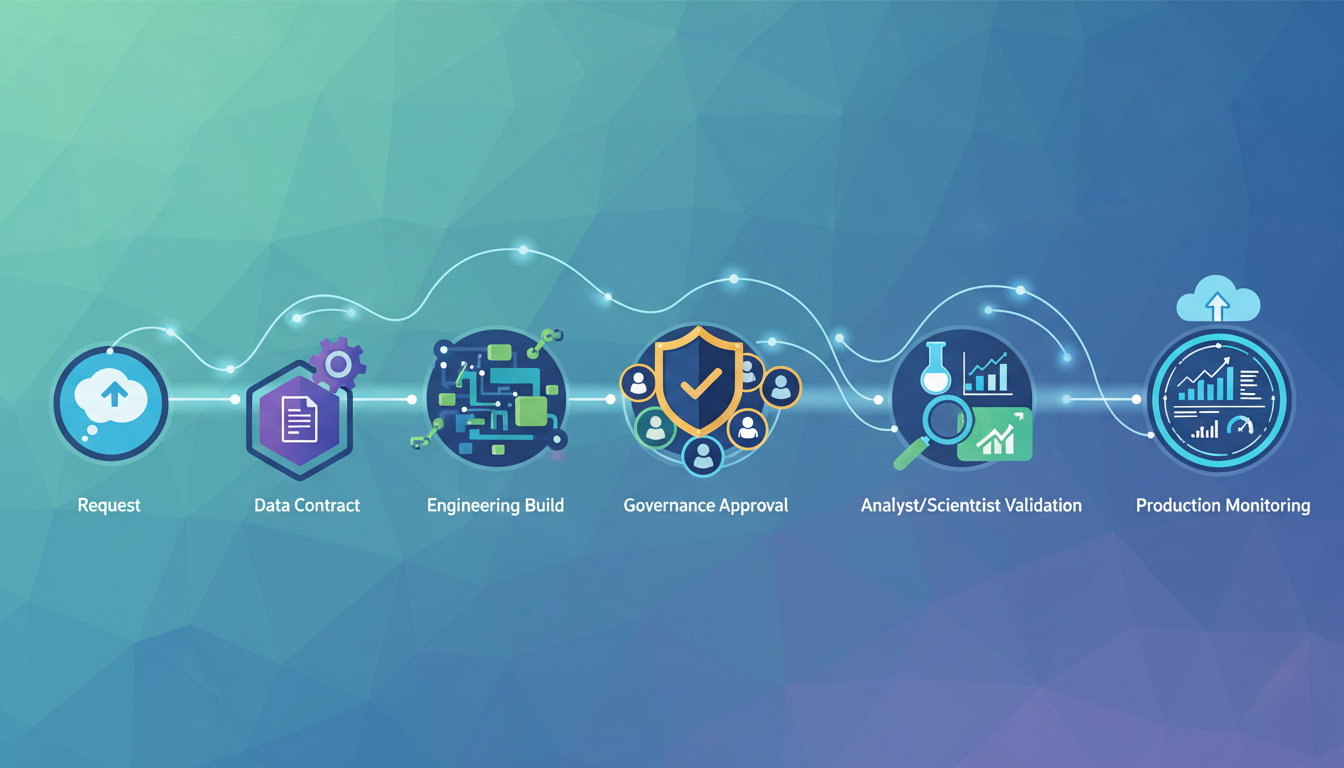
What Are the Six Production Handoffs?
- Request And Classify: Define the source, business purpose, sensitivity, owner, and intended bronze, silver, or gold destination.
- Set The Data Contract: Agree on schema, freshness, quality checks, retention, access scope, and consumer expectations.
- Build And Test: Engineer ingestion and transformations with orchestration, test cases, monitoring, and incident routing.
- Approve And Govern: Steward or owner reviews metadata, lineage, quality evidence, and row or column permissions.
- Validate Consumption: Analyst validates metrics and BI performance, or scientist logs a reproducible experiment against approved data.
- Deploy And Monitor: Release through environments, observe freshness, cost, quality, access, and failures, then improve the contract.
Where Do Deployment Boundaries Belong?
Use separate development, test, and production environments for code, configuration, and security definitions. Deployment pipelines should promote reviewed metadata and artifacts while preserving governed production data. That separation lets engineers test changes without asking analysts or scientists to accept unexpected production behavior.
Fabric supports three environments through development, test, and production workspaces, with metadata tracked separately from table and file data. If you are selecting a platform pattern, our platform comparison can help connect these operating requirements to your workload.
How Vision Board Helps Azure Data Teams Build This Operating Model
At Vision Board, we help Azure data engineering teams turn this architecture into operating practice. Our learning paths focus on the decisions that determine whether a shared foundation stays usable: table contracts, medallion ownership, permissions, Git workflows, semantic models, and workload-aware deployment. We work from realistic pipeline, SQL, and notebook handoffs, so your team can practice publishing a trusted dataset instead of merely discussing one. That makes our guidance useful when a team is modernizing integration jobs, introducing Fabric, or standardizing an existing lakehouse. We also help teams choose a learning format that fits their schedule and starting point, while keeping the work anchored to Azure responsibilities. Along the way, we show how to set practical release gates, make costs visible by workload, and use incidents as feedback for stronger data products. Bring your current architecture, roles, and delivery constraints to Vision Board.
FAQs on Unified Analytics Platform
Does a Unified Analytics Platform Mean Every Team Uses the Same Tool?
No. Teams share governed tables, definitions, lineage, and controls, while engineers, analysts, and scientists retain the tools and compute suited to their delivery responsibilities.
Should Analysts Query Bronze Tables?
Usually not. Bronze preserves source records and ingestion context, while approved silver or gold assets give analysts documented definitions, quality signals, and consumer-ready performance characteristics.
How Do Transactional Tables Help Concurrent Teams?
Transaction logs commit complete table versions, so readers access consistent data while writers publish changes. Schema controls and version history make failures easier to investigate and recover.
How Do We Keep Data Science Work Governed?
Give scientists approved detailed data through catalog-managed permissions, require experiment tracking, and route reusable features, predictions, and production models through documented ownership and release controls.
What Prevents BI Demand from Delaying Pipelines?
Separate compute pools, workload limits, environment boundaries, and cost tags prevent direct resource competition. Shared storage and governed tables still let every role work from trusted data.