Separate Role Tracks or One Migration Lab? Hadoop-to-Azure Migration Training

TL;DR
We recommend separate role tracks for foundation skills and one shared migration lab for global Hadoop-to-Azure migration training, because a migration succeeds only when cross-functional teams make the same operational decisions. This guide provides our comparison model, seven lab stages, India and US live-delivery design, RACI evidence, and readiness measures.
Separate Role Tracks or One Migration Lab? Hadoop-to-Azure Migration Training
Hadoop migrations often stall when training ends at tool familiarity instead of preparing teams to make hard delivery decisions together. A STEM study covering 225 studies found active learning improved average examination performance by about 6 percent, which is a useful reminder that applied work matters more than passive instruction.
For global Hadoop-to-Azure migration training, we recommend separate role tracks for foundational proficiency and one shared migration lab for execution. Architects, engineers, governance leads, analytics owners, and operations staff should build their own evidence, then use the same lab to settle mappings, controls, validation, cutover, and rollback. Mirrored live sessions and documented handoffs keep India and US participation equitable.
We explain how to select the delivery model, design the lab, schedule live learning across regions, and collect the evidence that tells us a team is ready for its next migration wave.
Which Training Model Fits a Global Hadoop Migration?
The right model depends on what the team must do after training. If the immediate aim is certification, a role track can be enough. If the team must convert a live Hadoop workload into a governed cloud implementation, a shared lab is necessary because technical, security, operational, and consumer decisions affect one another.
Azure’s adoption guidance organizes work across strategy, planning, readiness, adoption, governance, security, and management. That Azure framework supports our central point: migration readiness is broader than an engineering syllabus. The lab should make each participant confront the decisions that cross those boundaries.
| Decision Factor | Role Tracks Only | One Shared Migration Lab | Blended Model |
|---|---|---|---|
| Skill Depth | Deep within each role | Broad, but potentially uneven | Deep role skills plus shared application |
| Collaboration | Low unless deliberately added | High from the first session | High after focused preparation |
| Scheduling | Easy to mirror by regional cohort | Requires common overlap | Mirrored tracks plus limited overlap workshops |
| Artifacts | Individual exercises | One joint migration pack | Individual evidence feeding one joint pack |
| Assessment | Knowledge and role tasks | Team outcome only | Role rubric plus team readiness review |
| Migration Readiness | Risks siloed decisions | Risks shallow technical depth | Fits complex enterprise migration waves |
We use role tracks when people need individual competence before they can contribute meaningfully to a migration decision. We use a shared lab when the program has a representative workload, a real target state, and named owners who must collaborate. For most enterprise programs, the blended model is the practical answer: specialists arrive prepared, then practice the handoffs that production requires.
When the question is whether live cohorts or project work should carry more weight, compare live cohorts vs labs before setting the program format.
When Do Separate Role Tracks Earn Their Place?
Separate tracks are necessary when a role must create, approve, or operate a distinct part of the target platform. We do not split tracks merely because job titles differ. We split them when the evidence expected from each person differs and a generic session would leave a critical decision unowned.
A current Microsoft data-engineering role profile includes ingestion, transformation, security, solution management, monitoring, and optimization, alongside lakehouse and real-time workloads. That role profile supports a focused engineering track, particularly for people who will convert batch and streaming logic into cloud pipelines.
-
Architecture Track: Target architecture, network and identity decisions, resilience approach, integration patterns, and migration-wave sequencing.
-
Azure Data Engineering Track: Source-to-target mapping, batch pipelines, streaming flows, data-quality checks, performance baselines, and deployment automation.
-
Governance And Security Track: Classification, least-privilege access, policy controls, data residency, audit evidence, and risk acceptance.
-
Analytics Owner Track: Data-product acceptance criteria, semantic expectations, consumer validation, and business sign-off.
-
Operations Track: Monitoring, alert ownership, incident response, service-level expectations, cutover support, and legacy retirement readiness.
We connect these roles on one target platform, but we do not assume they need identical instruction. Engineers need time building pipelines. Architects need time testing tradeoffs. Governance and operations leads need time reviewing controls, runbooks, and escalation paths.
The roles converge on a shared outcome: a trusted, supportable data product rather than a lifted-and-shifted collection of jobs. For role depth before the migration lab, start with Azure learning paths.
What Must a Shared Hadoop-To-Azure Migration Lab Include?
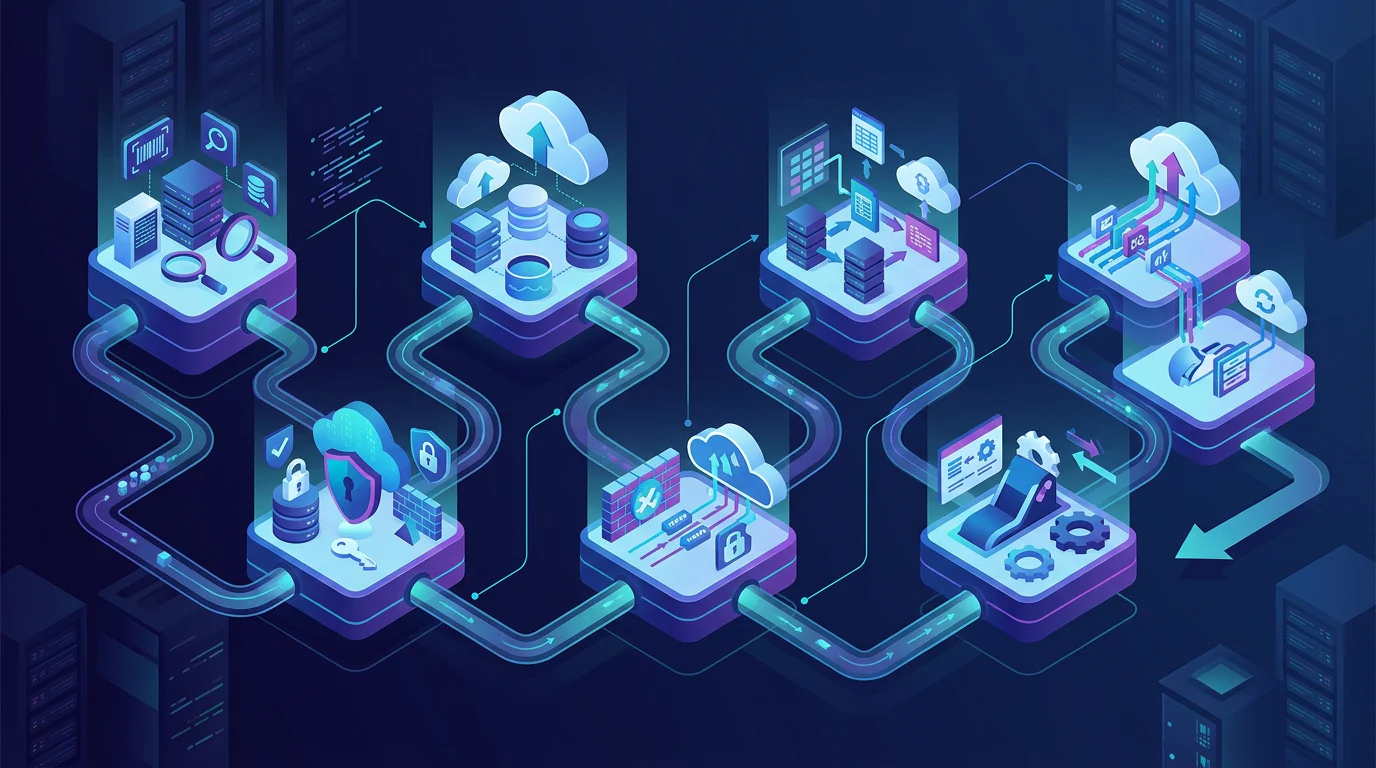
A credible Hadoop-to-Azure migration training lab is a project simulation built around a representative workload, not a sequence of disconnected exercises. We structure it as seven stages so every team reaches the same migration decision points before production pressure arrives.
Inventory the Estate and Design the Target
The lab starts with a Hadoop estate inventory: datasets, storage locations, transformation jobs, schedules, service accounts, dependencies, data classifications, consumer reports, and operational constraints. We then require a target architecture that names the landing zone, identity model, storage approach, orchestration, governance controls, observability, and cost owner.
A thorough migration assessment should capture dependencies and requirements before workloads move. In our lab, the inventory is not a document someone files away. It is the first artifact the architects, engineers, and business owners use to select a migration wave.
We use a unified analytics platform approach to connect architecture, engineering, governance, and consumer needs without pretending every workload requires the same implementation pattern.
Map Batch and Streaming Workloads
The third stage maps batch jobs. Each mapping should identify the source, transformation logic, schedule, dependencies, target data product, quality test, performance baseline, and accountable owner. The fourth stage maps streaming workloads, including the event producer, ingestion path, processing pattern, sink, late-data policy, recovery approach, and alert owner.
Azure’s streaming guidance separates producer, ingestion, processing, and sink layers. We use that structure because it prevents a team from treating every legacy job as if it had the same operational behavior. Batch and streaming can share a platform, but they still require different decisions.
Secure the Workload and Validate the Result
The fifth stage covers security and governance: access roles, secrets, encryption, classifications, retention, approved regions, policy checks, and audit records. The sixth stage proves readiness through reconciliation, functional testing, data-quality checks, performance comparison, monitoring, support documentation, and incident rehearsal.
We treat security as design work, not a late review gate. Azure security planning recommends including confidentiality, integrity, incident preparation, and observability in the adoption plan. The lab should therefore require the same people who build the pipeline to explain how it will be monitored, supported, and controlled.
Rehearse Cutover, Rollback, and Retirement
The seventh stage is a timed cutover simulation. Teams define the go or no-go owner, migration checkpoint, communications plan, validation steps, rollback triggers, and source-retirement criteria. They also identify which legacy components remain temporarily and who approves their final decommissioning.
This stage is where project-based learning becomes useful for migration delivery. We use live project training to move from isolated exercises to a shared migration pack that can be reviewed by the team responsible for the next wave.
How Do India and US Teams Learn Live Without Unequal Burden?
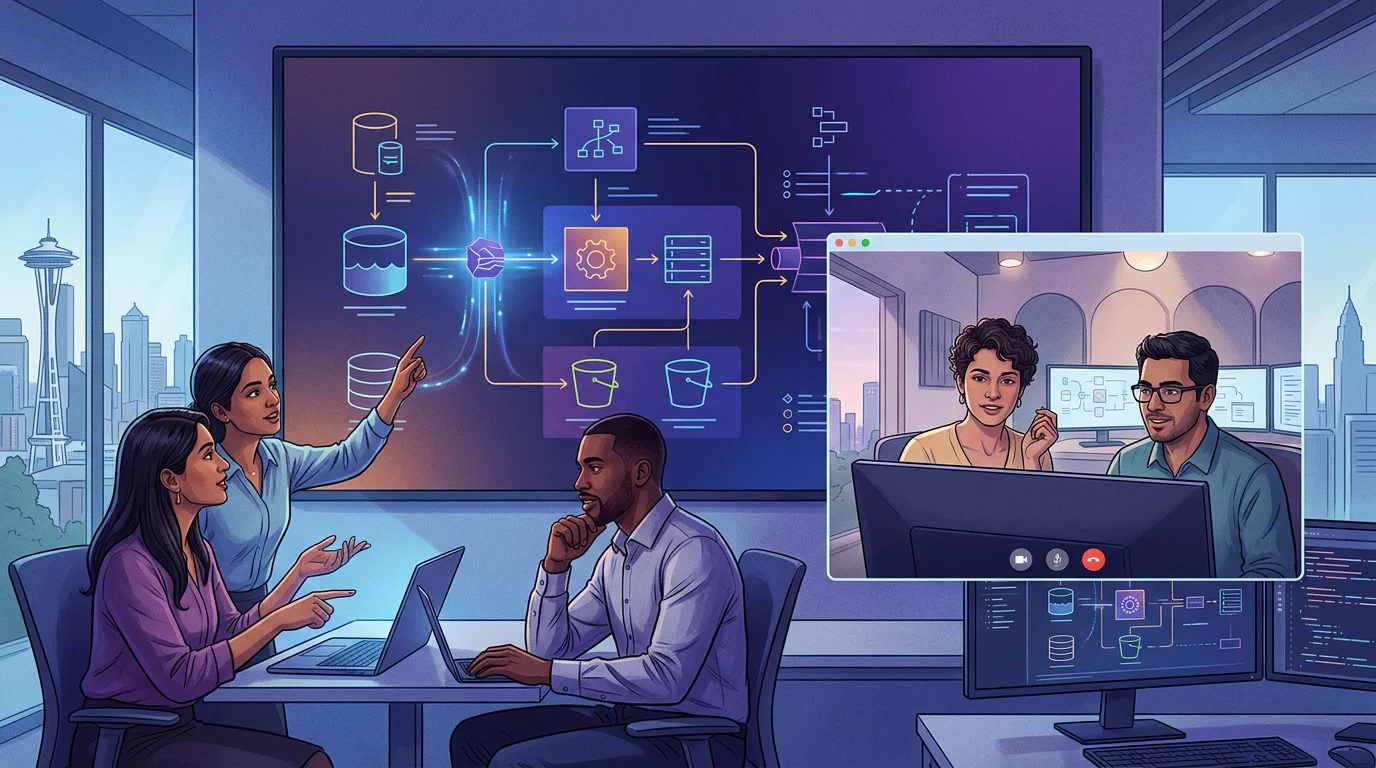
Global delivery fails when one region repeatedly attends late-night sessions while another gets the live facilitator, discussion, and office hours. We use mirrored instruction for role tracks, then reserve a smaller amount of shared overlap for decisions that cannot be handed off cleanly.
| Day | India Cohort | US Cohort | Shared Or Asynchronous Work |
|---|---|---|---|
| Monday | Live role-track workshop in local business hours | Mirrored live workshop in local business hours | Publish recording, exercises, and decision log |
| Tuesday | Lab build sprint | Mirrored lab build sprint | Comment on the other cohort’s artifacts |
| Wednesday | Local office hours | Local office hours | Short overlap workshop, scheduled using local calendar times |
| Thursday | Review US handoff | Review India handoff | Resolve open risks and architecture decisions |
| Friday | Regional demo recording | Regional demo recording | Joint migration-readiness review |
We avoid publishing a permanent time conversion because daylight-saving changes affect US schedules. Instead, we show the exact local time in each calendar invitation, rotate the overlap workshop when possible, and make the decision log the official record when a team is offline.
The delivery platform must support live participation, downloadable attendance evidence, controlled recording and transcript access, assessment records, and accessibility features. A Teams attendance report can show join and leave times as well as engagement information, which illustrates the kind of evidence we expect from any platform selected for a regulated enterprise program.
We also plan captions, accessible materials, and a reviewable transcript rather than treating recordings as a substitute for live instruction. This design gives both regions a live facilitator, a chance to challenge assumptions, and enough asynchronous context to continue work without waiting a full day.
For more scheduling patterns and delivery choices, use our guide to global team training.
How Do We Prove Readiness and Change Operating Habits?
We measure evidence, not seat time. Attendance matters because a participant cannot contribute to a decision they never heard, but a completed session does not prove that a team can migrate a production workload. We need role-level assessment, reviewed artifacts, and operational rehearsal.
A RACI matrix keeps the lab from becoming a shared document with no accountable owner. Azure’s RACI guidance recommends identifying who is Responsible, Accountable, Consulted, and Informed across teams. We apply that same discipline to migration artifacts.
| Artifact | Certified Architect | Azure Data Engineer | Governance Or Operations | Analytics Owner |
|---|---|---|---|---|
| Target Architecture And Landing Zone | A/R | C | C | I |
| Batch And Streaming Mapping | A | R | C | C |
| Security, Policy, And Access Evidence | C | R | A/R | I |
| Reconciliation And Acceptance Tests | C | R | C | A/R |
| Cutover, Rollback, And Support Runbook | A | R | R | C |
| Legacy Retirement Decision | C | C | R | A |
The cultural shift is equally important. We expect teams to move from ticket-based access toward governed self-service, from project handoff toward data-product ownership, and from isolated build teams toward shared incident responsibility. Platform guardrails should make the safe path easier, while owners remain accountable for the data products their consumers rely on.
Our readiness review checks attendance, scenario assessments, versioned migration artifacts, cutover rehearsals, monitoring plans, and consumer validation. We publish no universal pass rate because migration risk, workload complexity, and regulatory obligations differ by organization. Instead, we agree the thresholds before the lab begins, then use the same evidence to decide whether a team repeats a stage, starts a pilot wave, or advances to production.
For a broader view of aligning framework learning with migration execution, see enterprise training choices.
Build the Migration Lab with Vision Board
At Vision Board, we turn this decision framework into a working migration learning plan, not a generic course menu. We can help your program leaders define the roles that need focused instruction, select a representative Hadoop workload, and set the artifacts each participant must produce. Then we structure mirrored live sessions for India and US cohorts, shared working time for cross-region decisions, and review gates that connect learning evidence to the next migration wave. Our goal is practical confidence: engineers can build, architects can approve, governance leads can control risk, and operational owners can support the workload after cutover. Start by bringing us one real workload, its dependencies, and the team responsible for its future state. We will help you decide whether separate tracks, one shared lab, or a blended program is the right starting point for your team at Vision Board.
FAQs on Hadoop-to-Azure Migration Training
Should Hadoop Migration Teams Use Role-Based Training or Shared Labs?
We recommend both: role tracks establish individual technical depth, while a shared lab requires architects, engineers, governance leads, and owners to make migration decisions together.
How Do India and US Teams Attend Live Data Training?
We use mirrored local-time sessions, rotating overlap workshops, regional office hours, recordings, transcripts, and documented handoffs so neither cohort depends solely on inconvenient meeting times.
What Should a Hadoop-To-Azure Migration Lab Include?
The lab should cover inventory, target architecture, batch and streaming mappings, security controls, validation, cutover, rollback, operating evidence, legacy retirement decisions, and production review gates.
How Should Enterprise Data Training Cover Cultural Change?
We connect technical practice to data-product ownership, platform guardrails, governed self-service, consumer expectations, incident responsibility, and formal retirement of legacy operating habits across regions.