GenAI + Claude AI + Databricks Course From RAG to Capstone
Cloud-powered GenAI and agent engineering for data professionals.

By Devikrishna R, Founder · Reviewed 20 Sept 2026
- ₹50,000
- Public price shown in September 2026
- 3 live + capstone
- Published live-project and capstone structure
- 6+
- Portfolio-ready projects claimed
- Lifetime
- Access to recordings, resources, notebooks, and updates
Vision Board course page, 2026
Vision Board course page, 2026
Vision Board course page, 2026
Vision Board course page, 2026
In brief
This programme’s published path takes data professionals from Python and machine learning foundations through retrieval-augmented generation, vector databases, agentic AI, and an Azure Databricks capstone. It is built for data engineers, data scientists, developers, and early-career professionals who want portfolio outputs alongside career preparation.
What the published programme includes
Current public enrolment
One public course listing with stated ongoing learning access.
- ₹50,000 public price shown in September 2026
- ₹100,000 shown as the struck-through price
- Lifetime access to recordings, resources, code notebooks, and updates
Foundations and prompt work
Start with Python and progress into machine learning, natural language processing, GenAI, and prompting.
- Python syntax, data structures, NumPy, and Pandas
- Machine learning and natural language processing essentials
- GPT and BERT introduction
- Advanced prompt techniques
RAG and vector systems
Move from LangChain basics into contextual AI systems and retrieval work.
- LangChain fundamentals and Q&A chatbots
- Retrieval-augmented generation
- Pinecone and FAISS integration
- Contextual AI systems
Agentic AI and deployment
Connect agents, cloud deployment, and data-platform tools in a capstone.
- Agent memory, tools, and reasoning
- Streamlit and Hugging Face deployment
- Azure Databricks and Delta Lake
- Capstone project
Where we work
- Data engineers and data scientists moving into GenAI
- Developers building intelligent agents
- Early-career AI and cloud professionals
- Tech enthusiasts
A data-engineering route into GenAI systems
The published sequence begins with Python foundations and progresses through machine learning, prompt engineering, retrieval-augmented generation, vector databases, agentic workflows, cloud deployment, Azure Databricks, Delta Lake, and a capstone. Vision Board’s course curriculum names those modules and tools.
Learning Path Across the Programme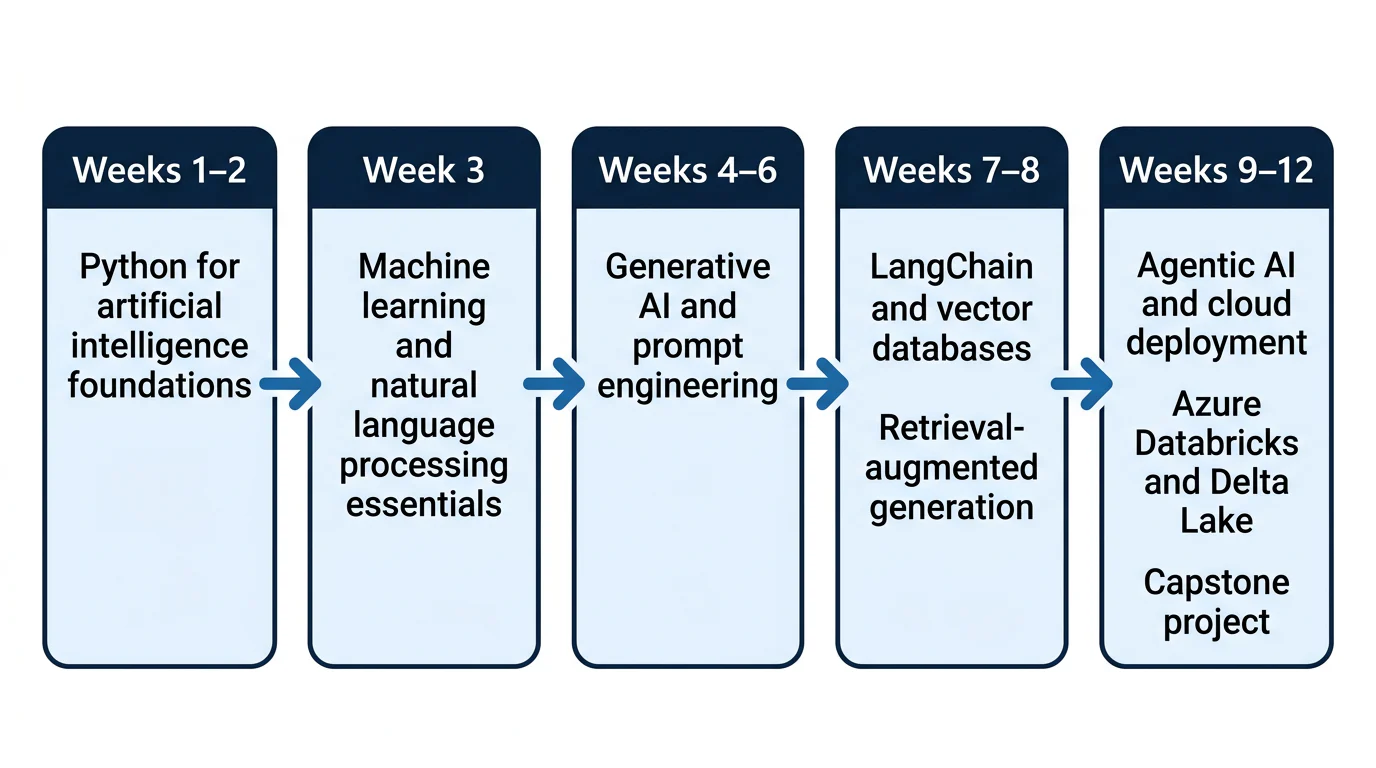
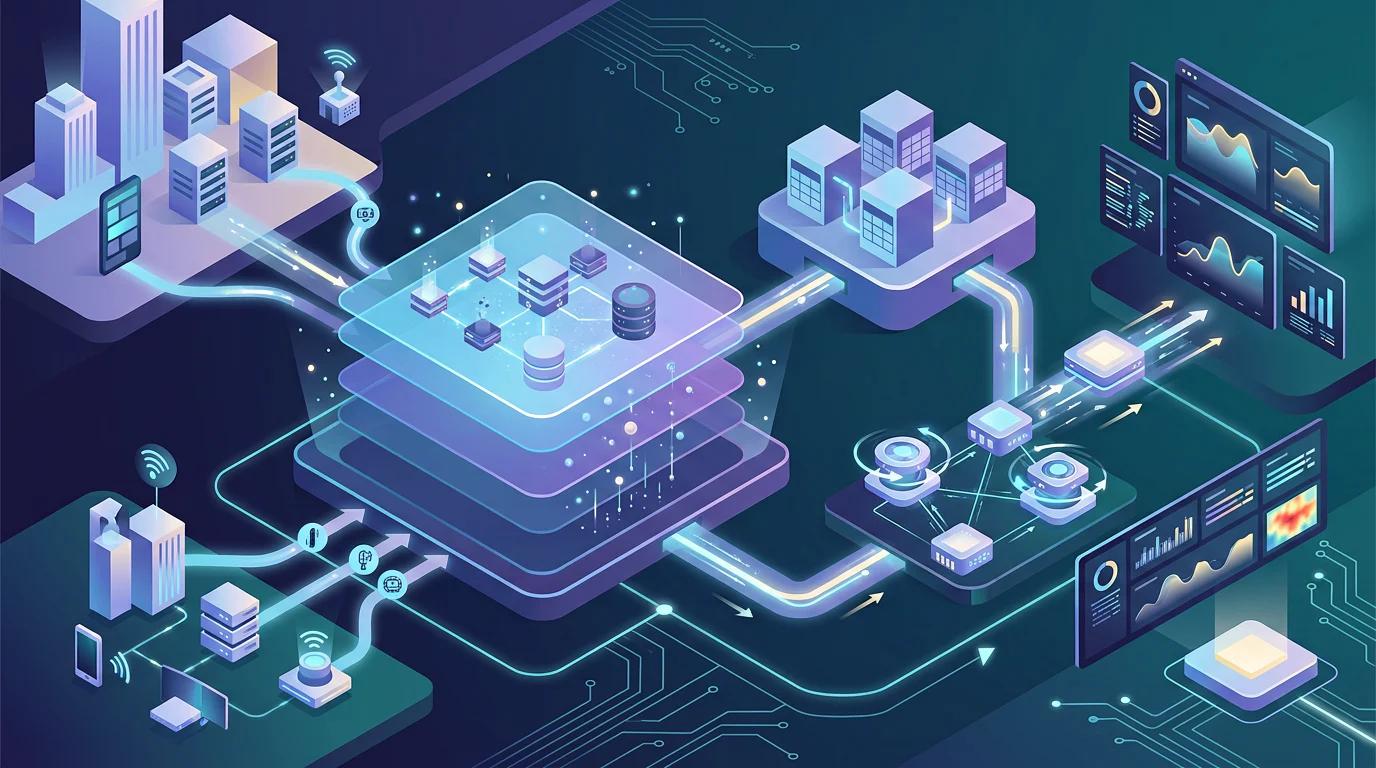
Databricks describes retrieval-augmented generation as a process of retrieval, augmentation, and generation, with data pipelines, evaluation, monitoring, and governance as key considerations. That makes this path most useful for learners who want to connect data work to grounded AI applications, rather than stop at prompting alone. Databricks’ RAG documentation explains the production components.
Choose the work you want to show
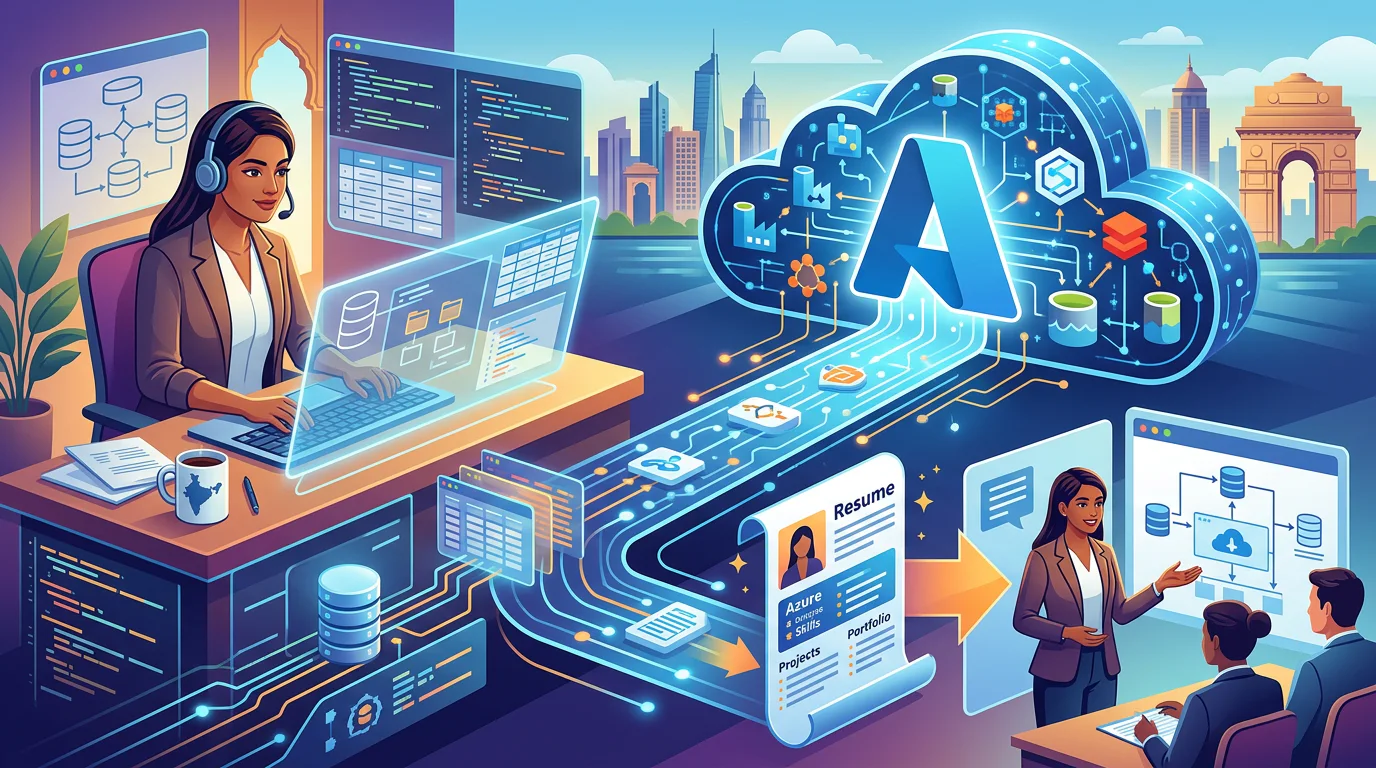
The published course examples include a personal AI assistant, a retrieval-augmented-generation chatbot, and an AI-powered data pipeline. Use the Azure data engineering project path to decide which portfolio direction best matches your next role, then use the portfolio project estimator to define a manageable scope.
Where the programme fits
This programme is positioned for data engineers and scientists moving into GenAI, developers building intelligent agents, early-career AI and cloud upskillers, and tech enthusiasts. It is less suitable for someone seeking only a short tool tutorial, because the published curriculum starts with foundations and extends into deployment, projects, and interview preparation.
The public course listing shows a single enrolment price and lifetime access to recordings, resources, code notebooks, and updates. For a broader view of how course fees vary in India, see data engineering course fees in India.
Keep reading
Frequently asked
Yes. The published audience includes data engineers and data scientists moving into generative AI, alongside developers, early-career AI and cloud professionals, and tech enthusiasts. The curriculum also begins with Python foundations, so it is presented for beginner and intermediate learners.
The course page says every module includes assignments and mini projects, with a capstone. Its published examples include a personal AI assistant, a retrieval-augmented-generation chatbot, and an AI-powered data pipeline, alongside a claim of six or more portfolio-ready projects.
The published curriculum names GPT, DALL·E, LangChain, Pinecone, FAISS, Streamlit, Hugging Face, Azure Databricks, Delta Lake, NumPy, and Pandas. It also covers prompt techniques, vector databases, retrieval-augmented generation, and agentic workflows.
Vision Board states that live sessions are recorded and made available within 24 hours. The course page also lists weekly live Q&A, discussion channels, one-to-one mentor feedback on projects, career-support workshops, and lifetime access to recordings, resources, code notebooks, and updates.
Build Your GenAI and Databricks Portfolio
See the published curriculum, current public price, and enrolment details.
Enrol Now