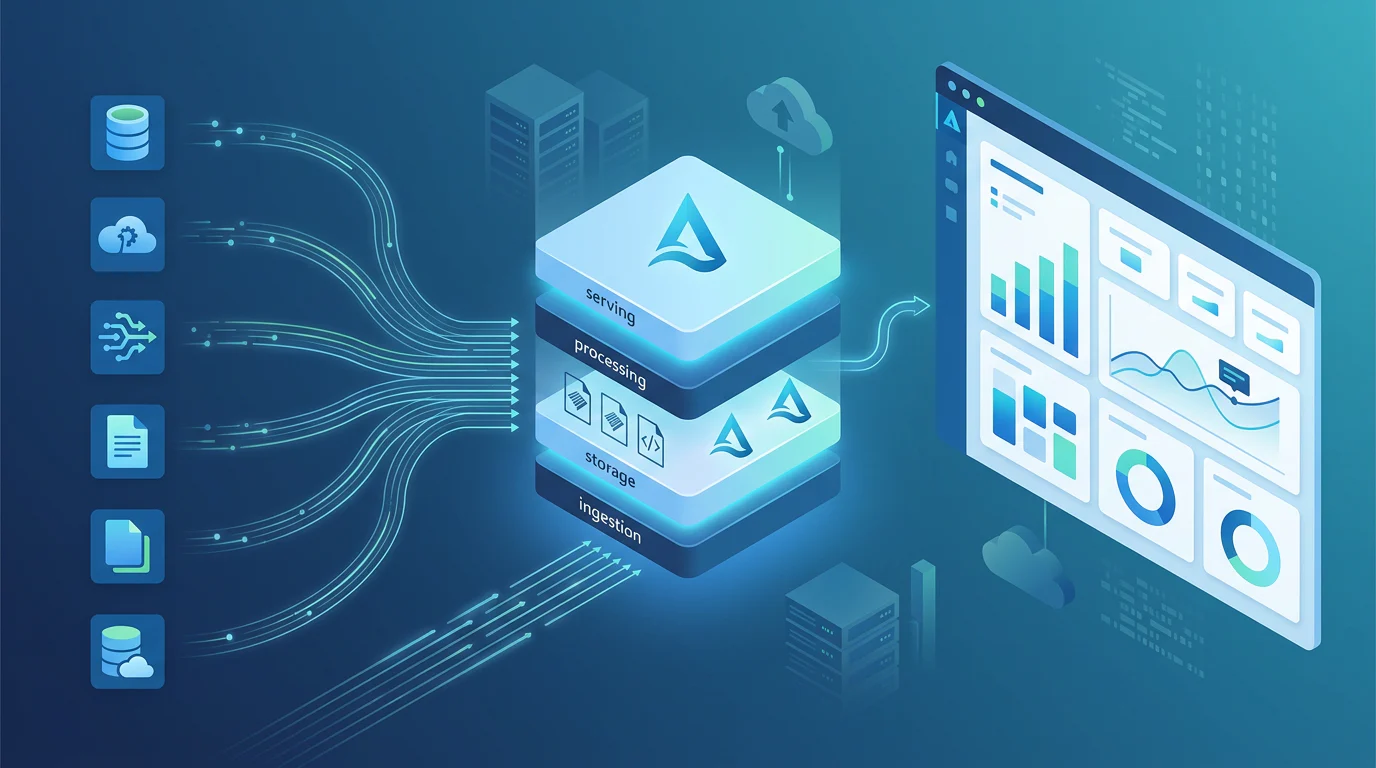


TL;DR
We explain why generative AI data pipeline costs can rise even as GPU and model prices fall: teams repeatedly pay for irrelevant, stale, or weakly governed context. We show what changed in 2026, where the recurring bill builds, and the measures that connect retrieval quality to cost per verified outcome.
Generative AI Data Pipeline Costs Beyond the GPU Bill
On February 20, 2026, a cost-management survey showed a sharper enterprise shift: 98% of respondents from 1,192 practitioners said they manage AI spend. For teams building generative AI applications, the budget conversation now reaches far beyond infrastructure capacity.
Generative AI data pipeline costs are rising beyond the GPU bill because every irrelevant document, stale chunk, duplicate record, and weak retrieval choice expands the context a model must process. The practical fix is to measure cost per verified outcome and reduce low-value context before it reaches the model.
We examine why this cost signal matters now, where recurring spend builds inside the pipeline, and the operational measures that make AI budgets easier to defend.
The 2026 Cost Signal Is Wider Than Infrastructure
Cost scrutiny has moved from hardware invoices to the full system that turns enterprise facts into usable model context. This does not mean accelerators are unimportant. It means a GPU-only view cannot show why a seemingly modest application becomes expensive after its documents, users, prompts, and retrieval paths grow.
The shift is especially important because model economics are changing quickly. A 2025 AI Index analysis found inference cost for a fixed performance threshold fell from $20 per million tokens in November 2022 to $0.07 in October 2024. Lower unit prices can help, but they do not reduce total spend when a system repeatedly supplies more context than a task requires.
For our audience, this is the useful distinction: model pricing is an external rate, while context discipline is an engineering decision. The latter determines how much information a workload repeatedly prepares, retrieves, sends, and evaluates.
Where Generative AI Data Pipeline Costs Accumulate
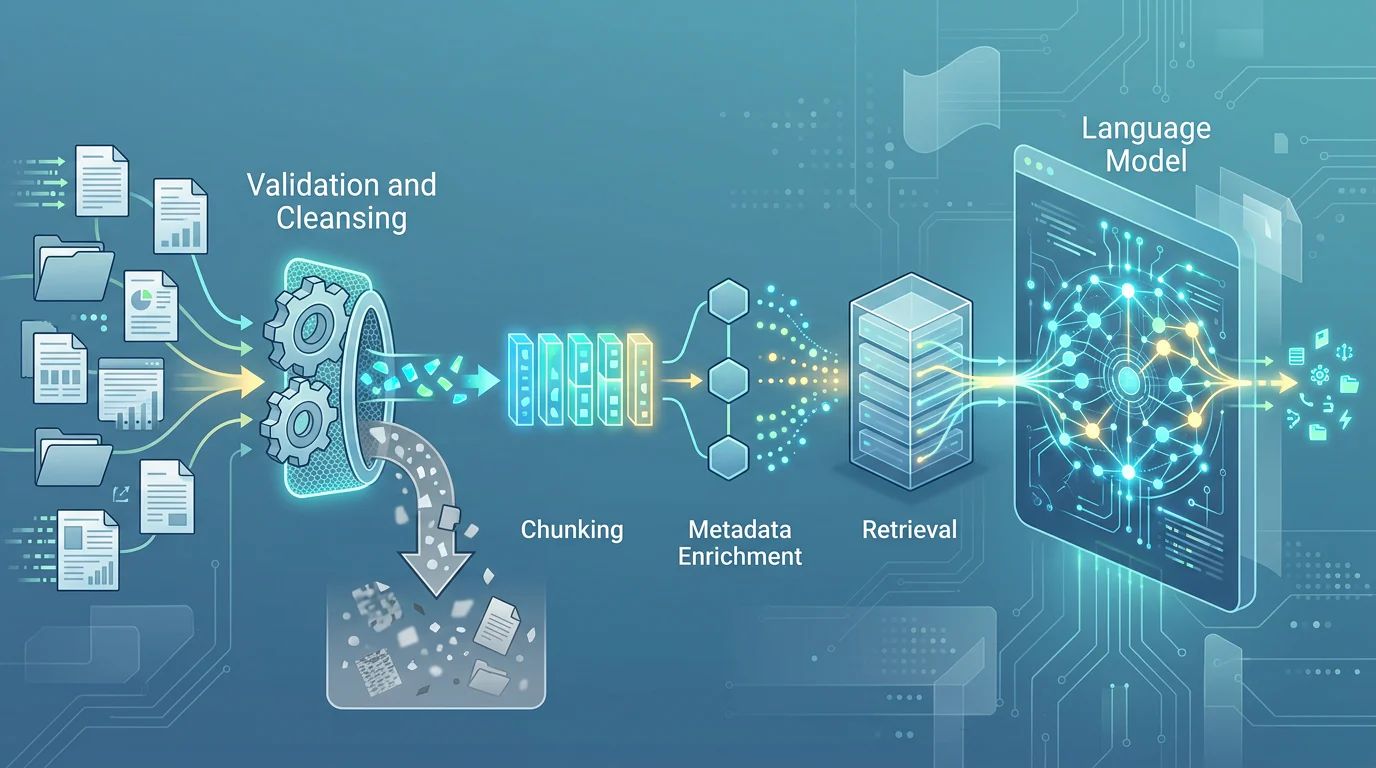
A current RAG architecture breaks the workflow into recognizable stages: prepare documents, split them into meaningful chunks, enrich metadata, create embeddings, index content, retrieve results, and assemble context for a response. Each stage can add value, but each can also preserve noise that recurs on every request.
Context Selection Comes First
Raw logs, complete folders, duplicate policies, and outdated records are easy to retain because storage is cheap and broad collection feels safe. At inference time, however, the model must work through what reaches its context. Sending less information is only useful when the retained material is current, authorized, and relevant to the task.
Retrieval Settings Multiply Work
Chunk size, overlap, metadata quality, and the number of results retrieved influence both answer quality and recurring processing. Too few results can omit decisive evidence. Too many can bury it in noise. The best setting is not the largest context window, but the smallest reliably sufficient context for a verified answer.
Contracts Prevent Expensive Rework
Schema drift and unclear data meaning create a different kind of hidden bill. A changed field, broken freshness expectation, or missing owner can force engineers to repair pipelines and can send flawed context into an automated workflow. We recommend treating contracts for schema, freshness, and permitted use as production controls, not passive documentation.
The Consequence Is Quality and Governance Debt
A cost problem becomes a reliability problem when the system cannot distinguish a useful record from a misleading one. Irrelevant context can make answers less direct, while stale or incompatible information can create confident but incorrect outputs. That is why we connect cost controls to retrieval testing instead of treating them as a finance-only exercise.
Provenance is equally important. The NIST GenAI profile identifies tracking the origin and history of data and metadata as a way to support trustworthy AI risk management. Teams should be able to trace important model context back to a source, version, owner, and freshness state.
A governed shared data layer makes this work easier to repeat across use cases. Our guide to centralizing trusted data explains the architectural foundation, while the immediate AI implication is simple: only trusted, relevant records should earn a place in a model request.
What to Measure Before the Next Budget Review
We would start with one outcome that a human can verify, such as a resolved support case, approved draft, or completed research task. Then we would measure the cost and evidence quality needed to complete that outcome, rather than celebrating token volume or request counts in isolation.
-
Cost Per Verified Outcome: Divide total pipeline and model spend by completed work that meets an agreed quality threshold.
-
Context Efficiency: Track input tokens, retrieved chunks, retrieved bytes, and duplicate-content rates for each workflow.
-
Data Freshness And Contracts: Record rejected records, failed validation checks, schema changes, and content that exceeds its allowed retention period.
-
Retrieval And Groundedness: Use retrieval evaluators to test whether context is relevant and whether responses stay supported by it.
The next step is not a wholesale rebuild. It is a short baseline period that reveals which documents, retrieval settings, and source systems drive spend without improving outcomes. Teams that need to operationalize those changes can begin with building Azure pipelines that make quality checks and observability part of normal delivery.
Build the Data Foundation with Vision Board
At Vision Board, we teach data teams how to turn this cost signal into operating discipline. Our learning paths connect ingestion, transformation, lakehouse design, governance, and observability so teams can reduce noise before it becomes model context. We focus on practical architecture decisions: defining useful data contracts, testing retrieval quality, tracing lineage, and connecting technical measurements to a business outcome. That matters when leadership asks why an AI bill rose even while model prices fell. If your team needs a shared way to design and review production pipelines, we can help you build that capability through hands-on, modern data engineering training. Start with Vision Board.
FAQs on Generative AI Data Pipeline Costs
What Is a Generative AI Data Pipeline?
A generative AI data pipeline prepares and validates source material, then cleans, chunks, enriches, embeds, indexes, retrieves, and evaluates it before context reaches a model.
Why Can Smaller Contexts Cost Less?
Smaller, relevant context can lower input processing and retrieval work. It can also improve answer relevance when the system excludes stale, duplicate, or unrelated source material.
Which Metric Should We Start With?
Start with cost per verified outcome, then diagnose it with input tokens, retrieved chunks, freshness failures, retrieval relevance, groundedness, and completion or escalation rates for each workflow.