
Which Azure ETL Tools Don’t Require Spark?
Compare Azure and Synapse ETL tools that avoid Spark management, including security, operations, cost, and fit for small analytics teams.

Which Azure ETL Tools Don’t Require Spark?
Microsoft documents a limit of 10,000 concurrent pipeline runs in a Fabric workspace, although most 12-person analytics teams running daily batches will care far more about reliable handoffs, private connectivity, and understandable failure logs.
For a 12-person Azure analytics team, Azure ETL tools without Spark include an Azure-native pipeline service, a Fabric-based data factory, and managed connector-first or low-code platforms. We recommend choosing first for Synapse, identity, and private-network fit, then comparing operational ownership and pricing units. Low-code reduces code, not responsibility.
We compare the viable tool categories, show where each fits a Synapse environment, and provide a selection model for teams without a dedicated DevOps role, alongside Can You Learn Azure Data Engineering in 90 Days? The 90-Day Azure Data Engineering Roadmap.
Which Azure ETL Tools Without Spark Fit Synapse?
The practical answer is that analysts do not need to learn Spark internals to build scheduled copy jobs, visual transformations, SQL activities, or managed ingestion flows. What changes between options is who owns the pipeline runtime, schema changes, network setup, and production promotion.
For Azure ETL tools without Spark, we separate the choice into five operating models. This is more useful than a connector-count contest because an analyst-friendly tool can still create substantial work for an Azure administrator or analytics engineer.
| Tool Category | Transformation Interface | Orchestration | CDC | Azure Targets | Private Networking | Schema Drift | Git And CI/CD | Monitoring | Pricing Basis | Operational Owner |
|---|---|---|---|---|---|---|---|---|---|---|
| Azure-native pipeline service | Visual mapping, copy, SQL activities | Native pipeline canvas | Native CDC resource | Synapse, ADLS, Azure SQL, Key Vault | Managed VNet and private endpoints | Explicit drift controls | Repository and deployment workflow | Pipeline and activity monitoring | Activity runs, integration units, compute | Analytics engineer |
| Fabric-based data factory | Copy Job, pipeline canvas, visual dataflows | Native pipelines | CDC in Copy Job, preview | Fabric, Azure storage, Azure SQL | VNet Data Gateway | Schema-agnostic copy and transformation controls | Git and deployment pipelines | Workspace monitoring hub | Capacity units and runtime | Analytics lead plus Fabric admin |
| Managed connector-first platform | Managed ingestion, SQL models outside the connector layer | Schedules, external orchestration for complex workflows | Connector-specific | Azure SQL and warehouse targets | Tier-dependent private connectivity | Automated evolution varies | API and transformation workflow | Connector status and alerts | Changed rows or model runs | Analytics engineer |
| Low-code orchestration platform | Visual canvas with SQL or Python components | Native orchestration | Streaming or batch CDC options | Synapse, Blob storage, Azure secrets | Hybrid or private connection options | Component-specific controls | Built-in or connected Git | Job logs and lineage options | Task hours or credits | Analytics engineer plus Azure admin |
| No-code integration platform | Mapping wizard, visual data flows, SQL-led transformations | Schedules and control flows | Connector-specific | Synapse Dedicated SQL Pool, Azure storage, Azure SQL | Agent-based private access | Mapping and error-log behavior varies | API automation, Git varies | Run logs and error details | Product-plan usage model | Analyst plus technical reviewer |
The two Azure-native paths deserve a closer look when private endpoints, managed identities, and Azure resource governance are central. The managed and no-code paths deserve equal consideration when source SaaS systems, routine ingestion, and a small operations burden matter more than custom workflow control. Our Azure Data Engineering Learning Paths Compared can help teams identify which skills they need before assigning ownership.
How Should a Small Azure Team Choose?
We would not declare one category universally best. A daily batch workload can be inexpensive and dependable in several models, but each model moves the responsibility boundary somewhere different.
Start by eliminating any option that cannot reach the required Synapse pool, use the required identity method, or satisfy the network review. A documented connector is not enough if the team needs private connectivity, predictable promotion between environments, or a clear owner for retries and failures.
| Need | Strong Starting Category | Why It Fits | Main Caution |
|---|---|---|---|
| Ingestion-first workloads | Managed connector-first platform | Reduces connector maintenance and supports recurring loads | Consumption can rise with changed data volume |
| Azure-native governance | Azure-native pipeline service | Fits Azure identity, storage, and control-plane patterns | CI/CD and integration setup still need ownership |
| Fabric-centered delivery | Fabric-based data factory | Combines guided copy, workspace operations, and dataflow tooling | Feature availability and gateway setup need review |
| SQL-led transformation | Low-code orchestration platform | Keeps visual control flow while allowing SQL transformation | Runtime and credit consumption require measurement |
| Smaller, simpler integrations | No-code integration platform | Fast visual setup for routine data movement | Confirm Synapse mode, logging depth, and network model |
Use the scorecard below only after the non-negotiables pass. A high total cannot compensate for an unsupported private-network path or an unclear deployment process.
| Selection Criterion | Weight | What We Would Score |
|---|---|---|
| Synapse And Azure Integration | 25 | Pool type, ADLS, Azure SQL, Key Vault, identity support |
| Low-DevOps Operations | 20 | Agents, runtime management, retries, and alert ownership |
| Security And Networking | 15 | Private endpoint, VNet, proxy, and secret-management fit |
| Analyst Usability | 15 | Visual authoring, SQL path, diagnostics, schema behavior |
| Daily Batch Economics | 15 | Runs, compute, data changes, and support tier |
| Governance And Promotion | 10 | Git, environments, deployment, logs, and rollback |
We recommend giving each non-negotiable a pass or fail before assigning a numeric score. Teams deciding between a warehouse-centered and lakehouse-centered future should also read Which Unified Analytics Platform Fits Your Workload? A Unified Analytics Platform Comparison, because the destination architecture affects the right integration layer.
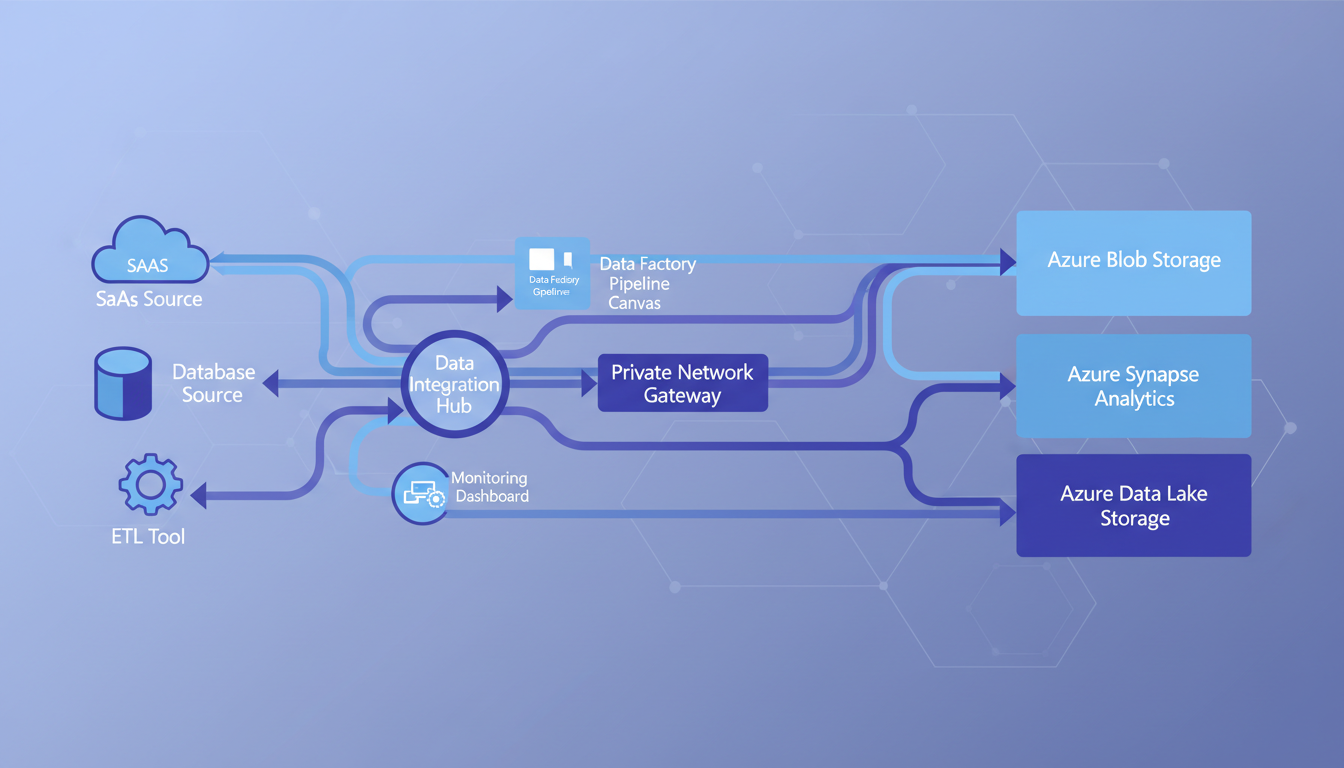
How Do Security, Deployment, and Monitoring Change the Decision?
Security configuration is often the real differentiator. A simple visual pipeline can be the right choice for a public cloud source and the wrong choice for a regulated source inside a private network. We treat networking as a product-fit test, not a late implementation detail.
How Should Teams Check Synapse and Storage Support?
Confirm whether the destination is Synapse Dedicated SQL Pool, Serverless SQL Pool, Azure SQL, Fabric Warehouse, Lakehouse, or ADLS. Those are different targets with different loading, authentication, and performance patterns.
For example, some no-code connections document support only for Dedicated SQL Pool, while bulk loads may stage files in Azure Blob Storage before loading. That can be a sensible architecture, but it affects storage permissions, retention expectations, and failure diagnosis. Our Azure Lakehouse Engineering Explained: Architecture, Benefits, and Best Practices explains why the destination layer must be decided before a tool is selected.
What Counts as Private Networking?
Private Link, managed private endpoints, a customer VNet gateway, SSH tunneling, and an installed agent are not interchangeable. They can all reduce exposure, but they distribute setup, network control, and maintenance differently.
Microsoft distinguishes a managed virtual network, where the service manages endpoints, from a VNet data gateway deployed in the customer network, where the customer controls routing and firewall rules. That distinction is central to the network comparison, especially for a team without a dedicated DevOps owner.
Who Owns Secrets and Environment Promotion?
Before choosing a platform, assign ownership for secrets, service identities, test environments, release approvals, and failed deployments. If nobody owns those tasks, a polished visual interface will not protect the production workload.
Azure-native tooling usually offers deeper integration with Azure identities and secret services, but deeper integration also means the team must understand permissions and deployment boundaries. Managed platforms can reduce infrastructure work, though their private connectivity and enterprise controls may require a higher plan or an installed component.
What Should Analysts See When a Job Fails?
Non-Spark users still need a clear answer to four questions: what failed, where it failed, whether it retried, and whether downstream data is safe to use. We would require run history, activity-level logs, alert delivery, and a documented schema-change behavior in a proof of concept.
For Fabric-based pipelines, Microsoft recommends the monitoring hub for tracking runs and using pipeline notifications for critical failures. Its security guidance also points teams toward Azure Key Vault and VNet gateways where appropriate. Review the Fabric security guidance with the security owner before treating any connector as production-ready.
Teams that want structured practice can review Store: Courses & store after agreeing on the operating model.
What Work and Cost Remain After Low-Code ETL?
Low-code changes the authoring experience. It does not remove responsibility for source changes, data-quality failures, performance, deployment, or cost. We would prefer a tool that makes those responsibilities visible to the team that owns the business outcome.
How Should Teams Handle Schema Drift and Data Quality?
A changed source column can create a harmless new field, a type conflict, a silently incomplete load, or a failed job. Teams should decide which outcome is acceptable before enabling automatic schema evolution.
For Azure-native visual dataflows, schema drift can be explicitly allowed, while error-row handling can redirect failed assertions or database-driver errors for supported sinks. That is a meaningful operational feature because it separates a data-quality issue from a total pipeline outage. Our How to Migrate SSIS Pipelines to Azure | Vision Board covers the same discipline for teams replacing package-based workflows.
How Should Teams Compare Pricing Units?
Do not compare a monthly subscription, changed-row meter, event meter, task-hour credit, and cloud-capacity bill as if they measure the same thing. Record the actual number of daily runs, changed records, model executions, runtime, gateway uptime, and support requirements first.
Azure Data Factory is consumption-based, including orchestration activity runs and data-integration-unit hours for copy activities. Fabric Copy Job charges capacity based on execution pattern and runtime, with published rates of 1.5 CU-hours for full-copy throughput resources and 3 CU-hours for incremental-copy throughput resources. Use the Copy Job pricing model as an input, not a promised total.
What Belongs in a Twelve-Month TCO?
A useful twelve-month model includes platform or capacity cost, consumption, private connectivity or gateway cost, destination compute, implementation hours, ongoing operating hours, and any support plan. We would use verified invoices, published meters, and approved internal labor assumptions only.
The most important line is often ongoing ownership. A low subscription price is not economical if weekly troubleshooting, manual schema cleanup, and production promotion consume scarce engineering time. Teams building those capabilities need a practical sequence for developing engineering judgment and production habits.
When Is Spark Still Justified?
Spark remains justified for custom distributed processing, complex streaming, machine learning workloads, specialized libraries, or transformations that exceed the selected visual or SQL runtime. It is also reasonable when a platform team already owns cost controls, policies, observability, and deployment.
For this audience, we would start with managed ingestion, visual pipelines, and SQL-led transformations for routine daily batches. Introduce Spark for a measured technical requirement, not because the team assumes every cloud ETL workload needs it.
Build Azure Data Skills with Vision Board
At Vision Board, we help Azure data teams turn platform choices into skills that survive production. Our teaching focuses on the decisions this comparison exposes: reading pipeline failures, working with lakehouse and warehouse patterns, preparing datasets for reliable daily loads, and recognizing when visual tooling is enough. We do not treat a drag-and-drop canvas as a substitute for architecture, security, or disciplined release practices. Instead, we help analysts and engineers build the judgment to challenge a connector claim, test private connectivity, price workloads honestly, and hand over a dependable pipeline. If your team is moving from legacy packages, adding Fabric, or formalizing Azure engineering practices, our learning paths give you a practical way to close those gaps together. From the first workshop onward, we turn technical decisions into confident, repeatable delivery across your data team and organization. Start with Vision Board’s Home: Homepage
FAQs on Azure ETL Tools Without Spark
Do Azure-Native Pipelines Require Analysts to Know Spark?
No. Analysts can build daily batch pipelines with visual mapping, copy, scheduling, and SQL activities without administering Spark clusters, even when distributed compute operates underneath.
What Should a Small Azure Team Test First?
Test Synapse destination support, private-network access, identity configuration, deployment promotion, failure logs, and daily-run costs for the people who will operate production workloads every day.
Can Low-Code Tools Replace Data Engineering Ownership?
No. Low-code tools reduce authoring effort, but teams still own source changes, data quality, security, costs, and release decisions across every production pipeline in their environment.